
Independent Project ADPA6000 - 2010958 - Daniel James Phillips
Element 1
Introduction
For my Independent Project, I am exploring how emotion and authenticity can improve the way outdoor photography workshops are marketed. In my own work, I have seen that audiences connect far more with content that feels honest, personal and rooted in real experiences. This project gives me the chance to understand why that is, and how emotional storytelling can be used intentionally through film, photography and written communication.
This is particularly relevant within a rapidly changing media landscape. The rise of AI generated imagery, video and written content has made it increasingly difficult for audiences to distinguish between real and artificial communication. As a result, authenticity is no longer just an aesthetic preference but a marker of credibility across all forms of media. Content that reflects genuine experience, process and personal perspective may now hold greater value than highly polished or artificially constructed visuals or text.
The practical output will be a promotional package for a wildlife and landscape photography workshop on the Isle of Skye, including a short film, a stills portfolio, a brochure and a webpage. These materials will allow me to test ideas from my research in a real creative context.
Overall, this project lets me combine academic investigation with practical fieldwork and creative production, while developing a more thoughtful and informed approach to how I present my work and future workshops.
Research Question
How can emotion and authenticity enhance the effectiveness of marketing for outdoor photography workshops?
Aims
The aim of this project is to understand how emotional and authentic storytelling influences audience engagement, and to apply this knowledge to the marketing of a photography workshop.
Objectives
Research key theories on emotional branding, authenticity and visual storytelling.
Analyse existing workshop marketing (Nikon School, Carmarthen Cameras, Skye Photo Academy, Harry Martin, etc).
Carry out fieldwork on the Isle of Skye to gather visuals and observations.
Produce a promotional film, brochure, webpage and photography portfolio.
Reflect on how theory and practice connect, and evaluate what works.
Methodology
My methodology combines academic research, fieldwork and creative practice. I will begin with a literature review focused on authenticity, emotional branding and audience behaviour, supported by an analysis of existing workshop advertising. I will also complete a recce on the Isle of Skye to gather early visuals, location notes and reflections on the practical aspects of running a workshop in this environment.
Using this research, I will produce a short promotional film and accompanying marketing materials that apply emotional and authentic storytelling techniques. Throughout the project, I will use reflective writing to connect my creative decisions to the theory, and to evaluate how well emotional authenticity translates into real marketing materials.
The effectiveness of these materials will be evaluated using the authenticity framework developed within this project, alongside reflective analysis of how well the outputs communicate emotional truth, credibility and connection to place.
Literature Review
Authenticity is a central part of how I work as a photographer and filmmaker, particularly when I am creating images in natural environments. Although my photographs are edited and curated, the intention behind them is always to represent moments as I genuinely experienced them. My aim is not to record an objective truth but to convey what felt significant, such as the atmosphere, the quietness, the tension of waiting, or the emotional resonance of a fleeting wildlife encounter. Berger (1972) writes that “the relation between what we see and what we know is never settled,” which suggests that every image is shaped by the experiences, memories and emotions of the person making it. In this sense, authenticity for me lies in emotional fidelity. I want to express what the moment meant rather than simply what it looked like. This approach shapes both my creative work and the way I believe a nature photography workshop should be marketed. The Skye workshop is not simply about directing people toward iconic locations. It is about sharing the genuine feeling of being there.
Marketing literature positions authenticity as a crucial factor in how audiences evaluate creative brands. Beverland (2005) argues that authentic brands demonstrate heritage, stylistic consistency, quality commitments and sincerity, which are qualities closely linked to the slow, process driven nature of wildlife photography. Jiang’s (2022) study shows that “perceived ad authenticity has a significant positive effect on advertising value and consumer engagement intention.” Audiences are more likely to trust and respond to material that feels honest and grounded rather than overtly commercial. This is particularly relevant in creative and experiential sectors where the emotional tone of marketing media can directly influence how people imagine the experience being sold.
The wider cultural demand for realness reinforces these ideas. Edelman’s (2021) global trust research shows that audiences increasingly value authenticity and transparency when engaging with brands, with trust becoming a key factor in how media and marketing are perceived. This distrust of idealised imagery is especially relevant to nature photography marketing. Many workshops are advertised with perfect conditions, dramatic skies and implied guarantees of wildlife sightings. This can create unrealistic expectations. In contrast, reflective and honest storytelling may feel more credible and align more closely with what audiences expect from a contemporary creative practice.
Photography theory broadens the discussion by examining how images foster emotional connection. Barthes’ Camera Lucida (1980) is influential because of his idea of the punctum, the detail that “pricks” the viewer and creates a distinctly personal emotional response. This suggests that authenticity in photography is not about perfection but about resonance. A quiet atmospheric moment on Skye may feel more truthful to a viewer than a dramatic image shaped heavily by post production techniques. Sontag (1977) cautions that photographs have the power to “beautify” reality, which can distort how we understand the natural world. Her critique highlights a tension in marketing. The more a workshop is presented as effortless or cinematic, the further the imagery risks drifting from genuine experience.
Film theory supports this through concepts that describe how honesty and emotion operate in moving images. Nichols’ Introduction to Documentary (2017) outlines the observational mode as an approach in which the filmmaker simply observes and allows events to unfold. This aligns closely with how I film nature, where the landscape and the wildlife dictate the pace and structure of what is captured. Nichols also describes the poetic mode, which prioritises atmosphere, rhythm and mood. This reflects my creative relationship with Skye. These ideas suggest that authenticity in film comes not from factual explanation but from sincerity of expression. A promotional film that uses reflective voiceover, natural sound and atmospheric cinematography is more likely to feel truthful than a conventional advertisement.
Research on human relationships with nature further deepens this discussion. Harari (2014) notes that for most of human history, people lived in direct interaction with natural environments. Our emotional responses to landscapes and wildlife are rooted in these ancient experiences. Ryan (2019) argues that modern life creates a sense of disconnection from nature, which makes moments of immersion feel emotionally restorative. Thurston’s (2019) accounts of wildlife photography emphasise that authenticity arises from patience, difficulty and unpredictability. These qualities mirror the reality of working in Scottish weather and suggest that authentic imagery carries emotional weight precisely because it reflects lived effort rather than idealised circumstance.
Digital media research clarifies how audiences interpret authenticity today. Jenkins (2006) describes contemporary audiences as part of a participatory culture. People expect transparency and insight into process rather than only finished work. This is especially relevant to photography workshops, where audiences often want to see how images were made. Instagram studies reinforce this idea. Trillò et al. (2021) found that users responded more positively to imagery perceived as natural, unfiltered and personal. This reflects a broader cultural shift toward valuing storytellers who reveal vulnerability and subjectivity.
The increasing presence of AI generated media further complicates how authenticity is understood in contemporary communication. Advances in artificial intelligence now allow for the creation of highly convincing images, video and written content, often without any direct connection to lived experience. This shift has contributed to growing audience scepticism, as it becomes more difficult to distinguish between genuine and artificial communication. Gaden and Dumitrica (2015) argue that authenticity functions as a key marker of credibility in digital culture, while more recent discussions around AI suggest that audiences are placing greater value on content that reflects real process and human perspective. Unlike AI generated media, which can replicate aesthetic or stylistic qualities, human created work carries experiential depth, emotional context and personal intention. In this sense, authenticity becomes not only a stylistic choice but a critical point of differentiation. For outdoor photography workshops, where the experience itself is rooted in real environments and unpredictable conditions, this reinforces the importance of grounded, experience based storytelling in building trust and engagement.
Examples from professional wildlife photography illustrate how these principles function in real practice. Ben Hall is known for emphasising ethical practice, patience and respect for wildlife. These values form part of his public identity and contribute to audience trust. Harry Skeggs blends fine art aesthetics with conservation messaging and relies heavily on personal philosophy and emotional storytelling. Both photographers demonstrate that authenticity is not simply a visual style. It is an ethos communicated through creative choices, written reflections and the consistency of a person’s practice.
Together these ideas show that authenticity functions on several interconnected levels. It can be an emotional quality in the images themselves, an ethical stance in how photography is approached, a communication strategy within marketing and an expectation shaped by online culture. For a nature photography workshop on the Isle of Skye, the literature indicates that authenticity should be a guiding principle rather than an aesthetic afterthought. Marketing media that reflects my relationship with the landscape including its unpredictability, atmosphere and emotional impact may resonate more strongly with audiences who want meaningful experiences. Instead of promising perfect conditions or guaranteed wildlife, an authentic and reflective film invites viewers into the true sensation of Skye. In this way my personal philosophy aligns with contemporary research on authenticity and emotion and provides a clear foundation for the development of the project.
While existing research demonstrates the importance of authenticity in branding, media and audience engagement, there is limited work that applies these ideas specifically to outdoor photography workshop marketing. In particular, there is little research that translates abstract concepts of authenticity into practical tools that can guide creative decision making. This creates a clear gap between theory and application, which this project aims to address through both the development of an authenticity framework and its implementation within real marketing materials.
In this context, authenticity becomes not simply a distinction between real and artificial content, but a question of how convincingly media communicates genuine experience, intention and emotional truth.
Authenticity Measurement Framework
Research on authenticity increasingly suggests that it can be examined through identifiable signals rather than understood only as a subjective feeling. Napoli et al. (2014) state that authenticity “can be assessed through observable cues,” while Morhart et al. (2015) argue that audiences rely on indicators such as credibility, integrity and sincerity when judging whether something feels genuine. However, these models were primarily developed within commercial branding contexts and do not directly translate to outdoor media, where experience is shaped by weather, unpredictability and environmental conditions.
Outdoor and adventure based storytelling carries different expectations around realism and trust. Jenkins (2006) argues that contemporary audiences “demand transparency,” while Rose and Wood (2005) suggest that credibility depends on maintaining a believable relationship between representation and lived experience. Within nature photography in particular, exaggeration or overly polished imagery risks breaking this trust. This creates a need for a framework specifically suited to outdoor creative practice.
Nikon School - Kingdom of the Musk Ox (Winter)

Element 1 & Research Conclusion
The framework presented here adapts existing authenticity research into a simplified and accessible system for evaluating outdoor and nature based media. Drawing on Grayson and Martinec’s (2004) argument that authenticity is “graded rather than absolute,” the framework uses ten categories scored from one to ten, producing a final percentage score intended to reflect the overall authenticity of a piece of media. The categories themselves are informed by wider authenticity and media research, including ideas surrounding honesty, emotional credibility, coherence, naturalness and ethical representation (Beverland, 2005; Morhart et al., 2015; Nichols, 2017; Sontag, 1977).
The purpose of the framework is not to evaluate technical skill, but to assess how convincingly media communicates sincerity, emotional truth and a grounded sense of place. Categories such as honesty, clarity, emotional realism, personal voice and realistic expectations were deliberately written in accessible language so that both creators and audiences could apply the system consistently.
The scoring structure was influenced by educational grading rubrics, which use defined criteria to support more consistent evaluation of subjective qualities. Reddy and Andrade (2010) argue that rubrics help structure interpretive judgement through observable criteria, making them particularly relevant to evaluating authenticity. Using a one to ten scale allows subtle differences in perceived authenticity to be recognised while remaining intuitive and accessible for non specialist users.
The framework also functions as a practical creative tool throughout the production process. During planning and pre production it can help identify ideas that feel grounded or overly idealised. During production and post production it can guide decisions around composition, narrative, editing and realism, helping ensure that stylistic choices do not undermine sincerity or credibility. Applying the framework to existing workshop marketing also allows comparison between different industry approaches, highlighting where authenticity is effectively communicated and where promotional material may rely on exaggerated or less credible representations.
Most importantly, the framework supports the central research question of how emotion and authenticity can enhance the effectiveness of marketing within outdoor photography workshops. By translating subjective impressions into structured and comparable results, it creates a clearer connection between theoretical discussions of authenticity and practical creative decision making.
Application of the Framework
To further explore the practical value of this framework, it was applied to selected examples of existing photography workshop marketing. This created a structured comparison between different approaches, highlighting how authenticity is communicated in practice.
Wildist / Taylor Burk
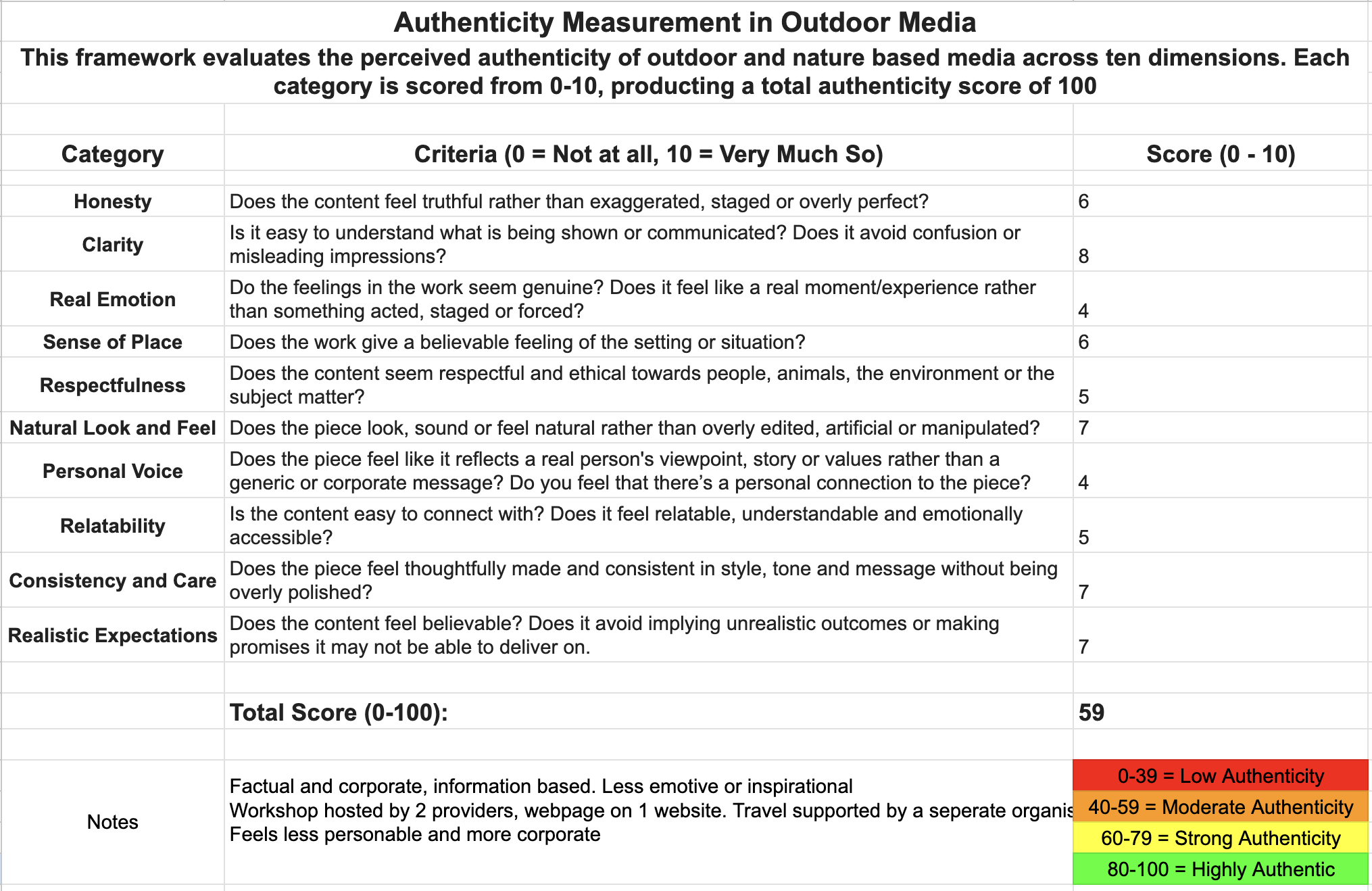
The application of the authenticity framework to this webpage resulted in a total score of 59, placing it at the upper end of the “moderate authenticity” range. Compared to the previous video examples, the webpage prioritises clarity, structure and logistical detail over emotional engagement or personal storytelling.
The content provides a clear overview of the workshop, including itinerary, pricing, accommodation and travel arrangements. This contributes to higher scores in clarity and realistic expectations, supporting the importance of transparency and credibility identified within the literature review (Rose and Wood, 2005). The inclusion of practical details helps establish trust and creates a realistic understanding of the experience being offered.
However, the webpage scores lower in areas relating to personal voice and emotional realism. The writing remains largely factual and descriptive, with limited indication of individual perspective or lived experience. Unlike more narrative driven content, the webpage adopts a more corporate tone, reducing relatability and emotional connection. While testimonials are included, they function more as supporting evidence than as part of a wider personal narrative.
The evaluation also highlights a tension between professionalism and authenticity. Although the webpage avoids overt exaggeration, it still presents the workshop as a carefully curated experience, focusing primarily on opportunities and highlights. This supports the idea discussed in the literature review that authenticity depends not only on factual accuracy, but also on how convincingly media communicates emotional sincerity and genuine experience.
Overall, this example demonstrates that strong informational clarity alone does not necessarily result in high perceived authenticity. While the webpage is effective in communicating practical information and building credibility, it lacks the personal perspective and emotional depth needed to create a stronger sense of connection with the audience
The application of the authenticity framework to this webpage resulted in a total score of 42, placing it within the “moderate authenticity” range and significantly lower than the previous examples. This reflects a more structured and brand led approach to marketing, where clarity and presentation are prioritised over personal voice and emotional authenticity.
The webpage provides a detailed overview of the workshop, including itinerary, pricing and logistical information. This contributes to moderate scores in clarity and realistic expectations, as the experience is communicated in a clear and accessible format. The inclusion of details such as group size, physical requirements and daily structure supports a sense of credibility and transparency, aligning with the importance of trust and clarity discussed within the literature review (Rose and Wood, 2005).
However, the tone of the writing is notably more corporate and less personal than the previous examples. While emotive language is used throughout, it often feels generalised and lacks the specificity or lived perspective that would make it feel genuinely reflective of experience. Promotional phrases describing the workshop as “unforgettable” or “extraordinary” contribute to a more idealised tone, reducing the sense of honesty and emotional realism identified as important within authenticity research.
Lower scores in personal voice and emotional engagement further reflect this lack of individual perspective. Unlike content created by independent photographers, the webpage communicates the workshop more as a product within a wider brand structure than as a personally shaped experience. The writing also demonstrates characteristics commonly associated with highly templated or AI assisted marketing content, including a consistent tone, broad descriptions and limited personal insight. This creates a sense of distance between the provider and the audience, reducing relatability and emotional connection.
Overall, this example demonstrates that strong structure and professionalism do not necessarily result in high perceived authenticity. While the webpage succeeds in communicating practical information and presenting a credible offering, the lack of personal voice, emotional depth and specificity results in a more corporate and less engaging representation of the experience. This reinforces the idea that authenticity depends not only on what is communicated, but on how convincingly lived experience and individual perspective are conveyed.
This research demonstrates that emotion and authenticity can enhance the effectiveness of marketing for outdoor photography workshops by building trust, relatability and audience engagement. The literature suggests that authenticity is not a fixed quality, but something shaped through emotional resonance, personal voice and credibility. Within a media landscape increasingly influenced by AI generated imagery and written content, authenticity becomes an important marker of trust, particularly when media communicates genuine experience, intention and connection to place.
The application of the authenticity framework to existing workshop marketing reinforces this idea. The examples analysed show that different approaches prioritise different aspects of authenticity, including emotional connection, clarity and structured presentation. However, the findings suggest that authenticity is most effective when these elements are balanced, rather than relied upon in isolation.
This highlights an important challenge within workshop marketing, where highly polished or heavily structured content can reduce perceived authenticity if it lacks emotional honesty or personal perspective. The framework developed within this project provides a practical method for evaluating these tensions, allowing authenticity to be considered as both a measurable and actionable component of creative work.
Together, these findings provide a foundation for the practical development of the project. In Element 2, the framework will be applied throughout the planning, production and post production process to guide the creation of marketing materials that balance emotional authenticity, clarity and credibility.
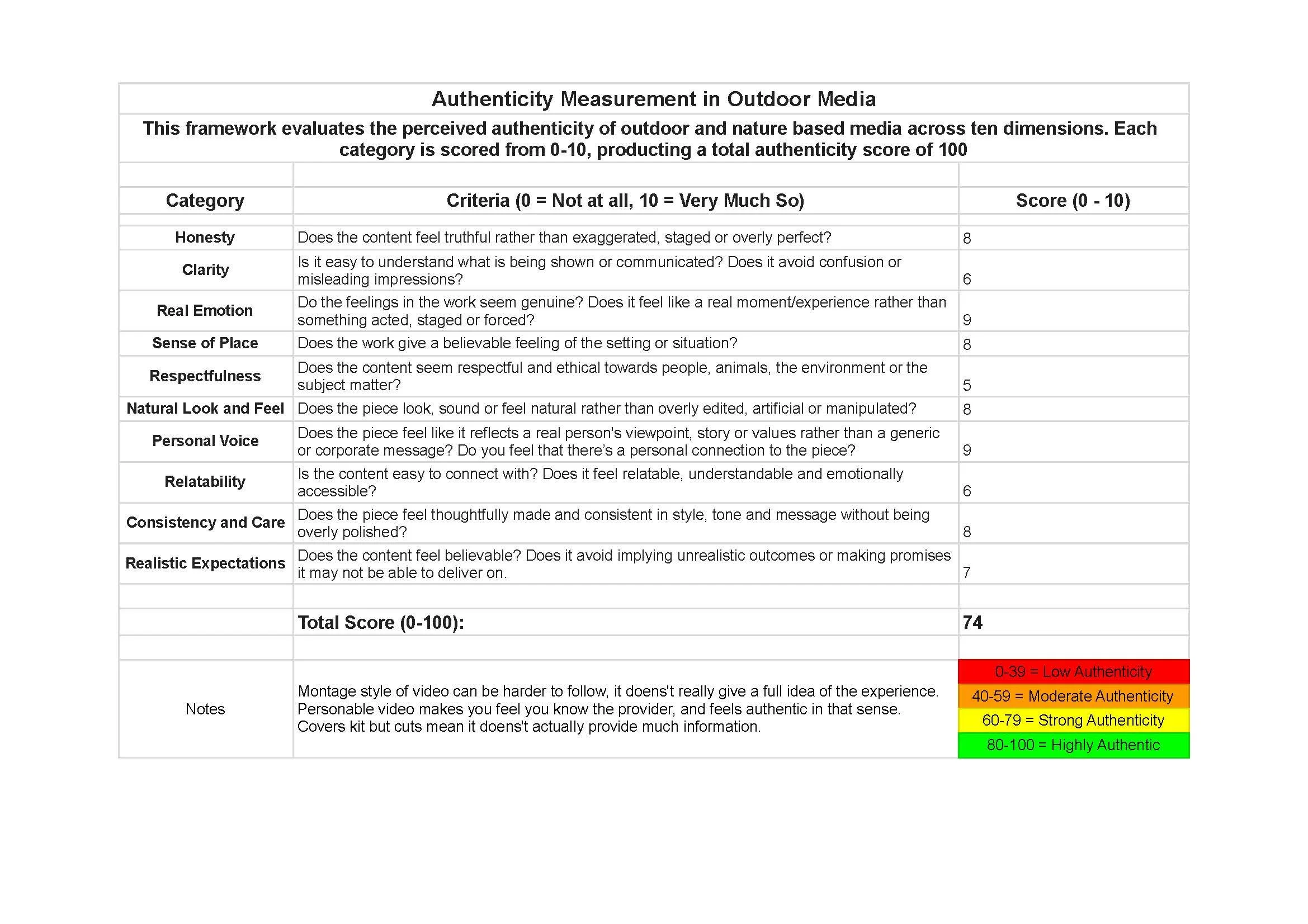
The application of the authenticity framework to this video resulted in a total score of 74, placing it within the “strong authenticity” range. This reflects the video’s ability to communicate a sense of genuine experience and personal connection, particularly through the informal presence of the workshop leader and the use of observational footage. This supports Beverland’s (2005) argument that authenticity is closely linked to sincerity and personal identity within branding and media.
However, the evaluation also highlights limitations in how the experience is communicated. While the video feels personable and grounded, the montage style reduces clarity and makes it difficult to fully understand the structure or progression of the workshop. Emotional engagement is also limited, with only brief behind the scenes moments conveying a stronger sense of excitement or atmosphere.
This example reflects a tension identified within the literature review between authenticity, emotional engagement and clear communication. While the use of repurposed and informal footage supports a sense of realism, it also provides only a partial representation of the experience. Overall, the video succeeds in presenting a relatable and credible impression of the workshop, but is less effective in communicating its depth, atmosphere and structure.
Espen Holland - Wildlife Photography Workshops 2023
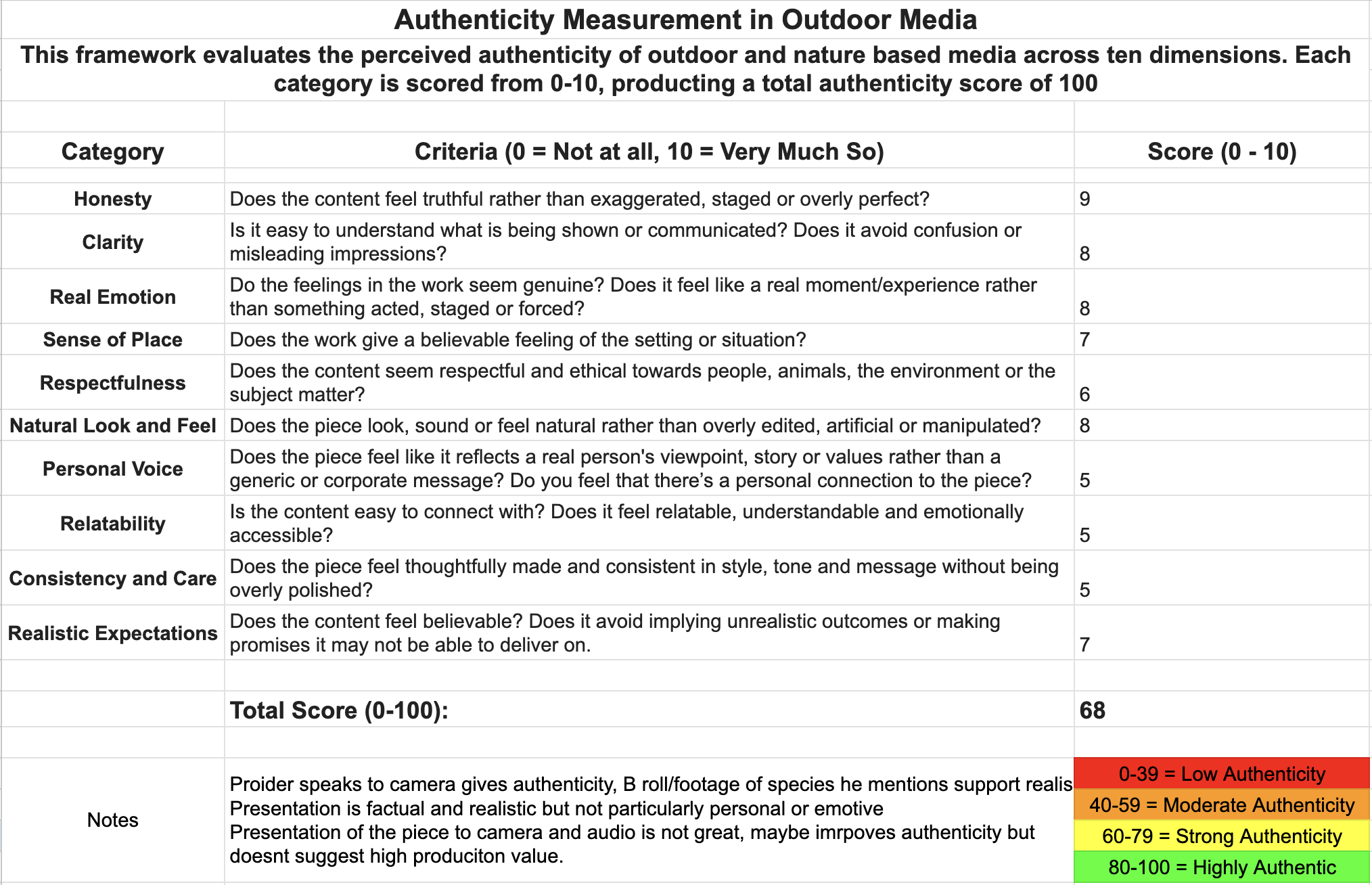
The application of the authenticity framework to this video resulted in a total score of 68, placing it within the “strong authenticity” range, though lower than the previous example. Unlike the first video, authenticity here is communicated more through direct presentation and factual explanation than through atmosphere or personal storytelling.
The provider speaking directly to camera contributes positively to perceived honesty and clarity, giving the viewer a straightforward understanding of the workshop structure and content. This supports research discussed in the literature review, where transparency and credibility are identified as important indicators of authenticity (Rose and Wood, 2005; Morhart et al., 2015).
However, the more formal and informational tone reduces emotional engagement and personal connection. Lower scores in personal voice and relatability suggest that, while the content feels realistic and trustworthy, it lacks the emotional depth and individuality that help audiences connect more strongly with an experience. Supporting footage of locations and species reinforces realism, but contributes little to atmosphere or interpretation.
The lower production quality also creates an interesting tension. While it may reduce perceived professionalism, it avoids the appearance of over production, reinforcing the idea that authenticity is not necessarily dependent on technical polish, but on how convincingly genuine experience and intention are communicated.
Overall, this example demonstrates that clarity and honesty alone are not always enough to create a highly engaging form of marketing. While the video succeeds in presenting a realistic overview of the workshop, it lacks the emotional resonance and personal perspective that the literature review identifies as important in building stronger audience connection.
James Popsys / Jeroen Van Nieuwenhove - East Greenland Workshops
Element 2
Introduction
This section presents the practical outcomes of the project, including a short promotional film, a stills photography portfolio, a workshop brochure, a poster and a dedicated webpage to host all media and copy. These materials were developed to market a wildlife and landscape photography workshop on the Isle of Skye.
While the outputs are visually polished and produced to a high technical standard, the intention behind them differs from more conventional workshop marketing. Rather than presenting an idealised or overly dramatic version of the experience, the project adopts a more reflective and emotive approach, aiming to communicate atmosphere, process and personal connection to place. This reflects the project’s wider focus on emotional realism and credible representation discussed in Element 1.
The film adopts a poetic structure, allowing space for interpretation, which aligns with Nichols’ (2017) description of the poetic mode within documentary filmmaking. Similarly, the webpage and brochure use descriptive and emotive language while avoiding exaggerated claims or unrealistic expectations, supporting the importance of transparency and credibility identified within the research. The brochure adopts a slightly more pragmatic tone, balancing emotional storytelling with clear and practical information. The imagery used throughout the project was captured across two separate trips to the Isle of Skye during the same seasonal conditions in which the workshop is advertised, helping maintain consistency between the marketing and the expected experience.
This section examines how the principles of authenticity and emotional storytelling explored in Element 1 influenced the development of these outputs, highlighting key decisions made throughout pre-production, production and post-production. It also evaluates how effectively the final materials communicate the qualities identified within the authenticity framework, including emotional realism, personal perspective and realistic expectation.
Webpage
Film
Brochure
Poster
Photographic Portfolio
1 - Webpage
The webpage was developed as the central platform within the project, bringing together the film, photography, brochure and written content into a single multi-platform experience. Its purpose is to guide the viewer from emotional engagement through to practical understanding and, ultimately, towards enquiry or booking.
Rather than following a conventional marketing structure, the page prioritises atmosphere, philosophy and personal connection before introducing practical information. This supported the project’s emphasis on emotional realism, credibility and audience trust.
Banner
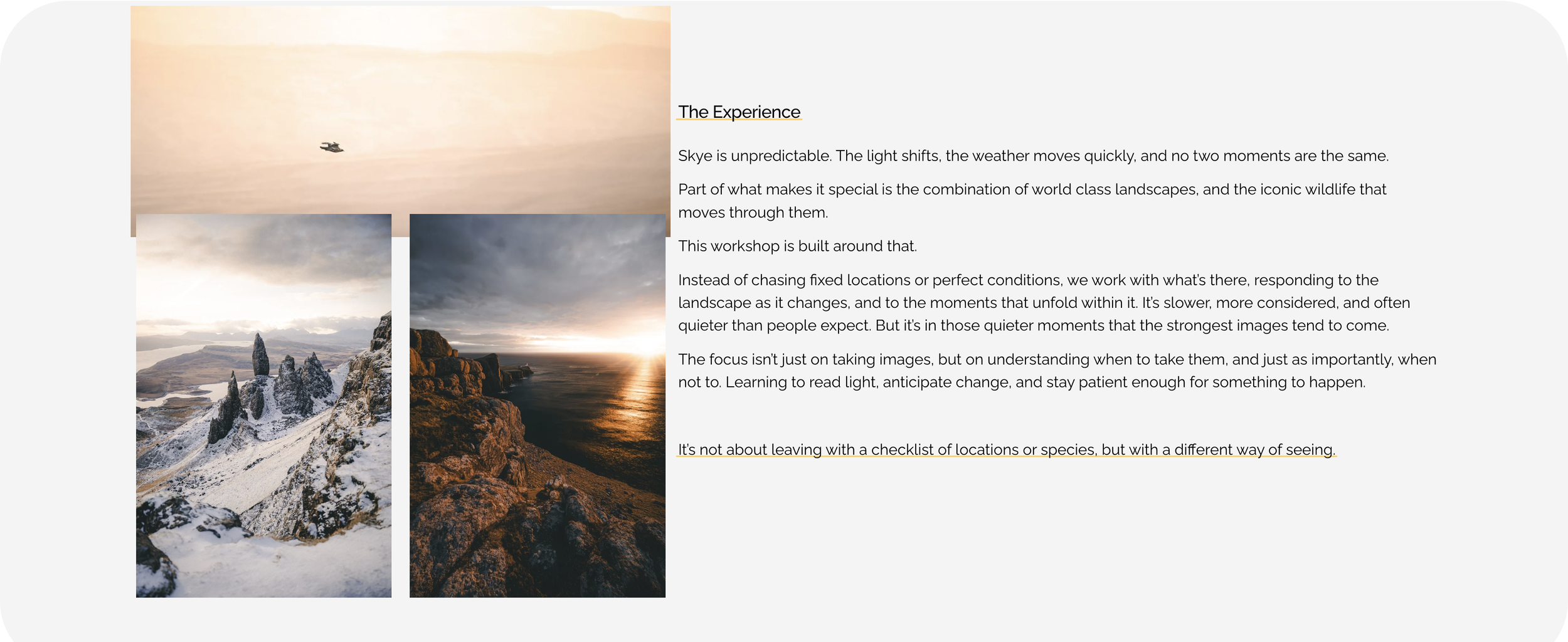
The Experience
The Film (For a Moment)

By embedding the film within this structure, it contributes to a more immersive and considered experience, while also functioning as one element within a wider multi platform approach, where individual outputs work collectively to guide the audience towards a consistent and unified interpretation of the workshop.
What You’ll Learn
Itinerary/What’s Included/What You’ll Need

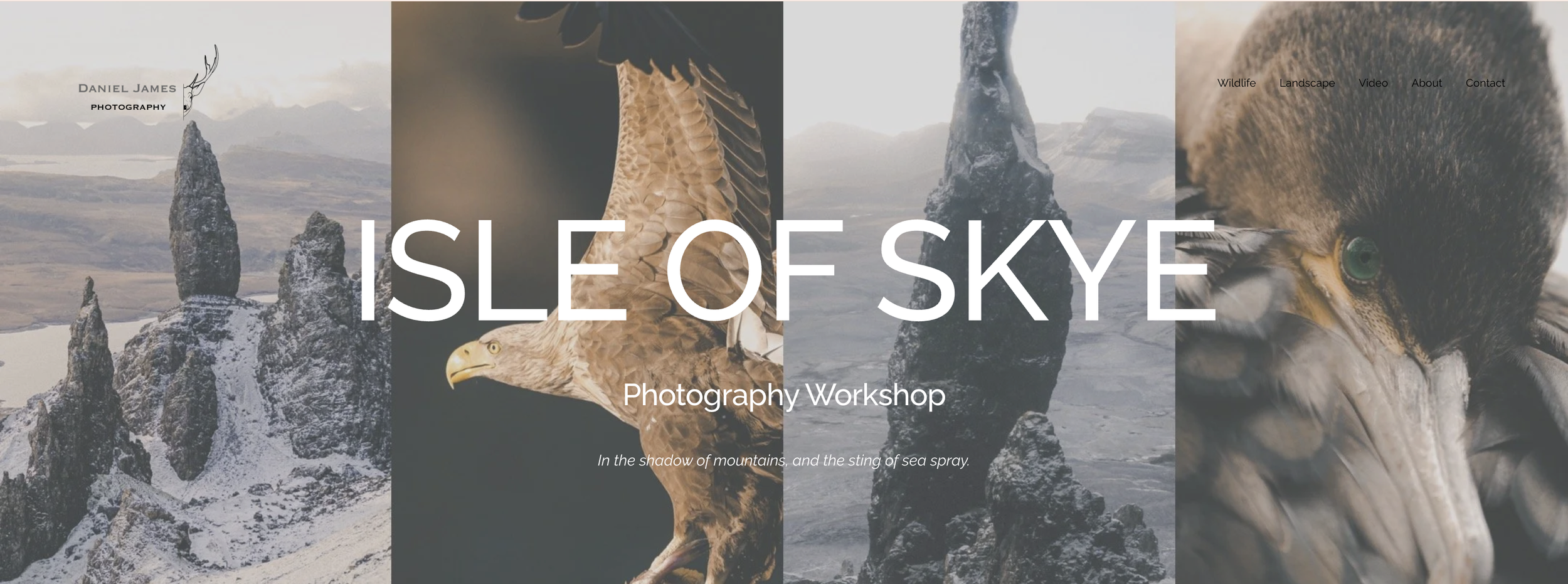
The opening banner establishes the visual identity and tone of the webpage through a combination of landscape and wildlife imagery, presented in a split composition. This immediately communicates the core concept of the workshop, positioning it between these two disciplines rather than focusing on one in isolation. The use of minimal text and the absence of overtly promotional language creates a restrained and considered introduction, allowing the imagery to lead the viewer’s interpretation. By using imagery captured during the same seasonal conditions in which the workshop is advertised, the banner also reinforces a sense of realism and credibility, ensuring that the initial impression reflects the actual environment participants can expect.
The “Experience” section appears immediately after the opening banner, establishing the philosophy of the workshop before introducing visual or practical content. Following development feedback (Aggersberg, 2026), this section was moved ahead of the film to ensure the viewer first engaged with the intended approach and values behind the workshop.
The text emphasises unpredictability, patience and responsiveness to the environment, avoiding guaranteed outcomes or highly promotional language. This reinforced the workshop’s focus on environmental responsiveness and realistic expectation, positioning the workshop as a way of engaging with the landscape rather than a fixed series of photographic results.
The film is positioned after the “Experience” section, functioning as a continuation of the narrative rather than an introduction to the workshop. This placement ensures that the viewer engages with the conceptual framework of the experience before encountering its visual representation.
Within the structure of the webpage, the film acts as a point of transition from written interpretation to visual engagement. Rather than operating as a standalone promotional element, it is integrated into the broader progression of the page, supporting a more cohesive and controlled audience journey.
The “What You’ll Learn” section acts as a transition from the reflective and emotive elements of the webpage towards more practical application. Using image-led examples and concise descriptions, the section demonstrates how the workshop philosophy translates into photographic outcomes without relying on fixed promises or guaranteed results.
Rather than focusing solely on technical instruction, the learning points emphasise observation, timing and responsiveness to conditions, reinforcing the project’s emphasis on authenticity through process and experience. This allowed practical information to be introduced without disrupting the reflective pacing of the webpage.

The practical information sections appear after the conceptual and visual elements of the webpage, introducing structure and clarity once the viewer has engaged with the experience itself. These sections shift the focus from interpretation towards practical understanding, outlining the realities of the workshop in a clear and accessible format.
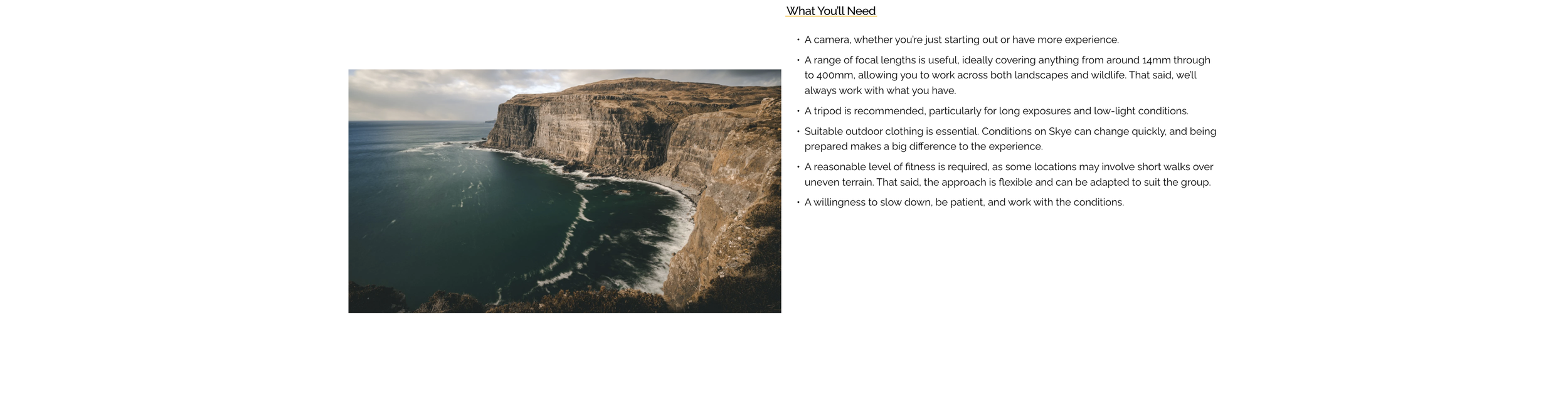
Information surrounding the itinerary, equipment and physical requirements is presented transparently, avoiding exaggerated claims or guaranteed outcomes. The itinerary is described as a flexible framework shaped by weather, light and wildlife behaviour, while the equipment guidance reflects the actual conditions participants are likely to encounter. This helped avoid presenting the workshop as overly controlled or predictable.
Call To Action/Brochure/Register Interest
Gallery
Production
Post-Production
3 - Brochure

The call-to-action and supporting brochure sections provide a pathway from engagement towards practical decision-making while maintaining the restrained tone established throughout the webpage. Rather than relying on urgency-driven or highly persuasive language, the viewer is guided towards further engagement through clear and accessible information.
The inclusion of the brochure reinforces the project’s multi platform approach, where different outputs perform different communicative roles. The webpage functions as the emotional and conceptual hub of the project, while the brochure provides a more structured and informational counterpart.
This approach reflects the importance of transparency and credibility identified within the literature review (Jenkins, 2006; Rose and Wood, 2005), supporting the idea that authenticity in marketing is shaped not only by presentation, but by how audiences are invited to engage with content.
The webpage concludes with a gallery of images captured during the development of the project, reinforcing the experience through direct visual evidence. Positioned at the end of the page, the gallery acts as a final point of engagement, allowing the viewer to revisit the workshop through imagery after progressing through the conceptual, visual and practical elements.
Overall, the structure of the webpage follows a deliberate progression from emotional engagement towards practical understanding. By prioritising atmosphere, philosophy and personal perspective before introducing logistical information, the page avoids more conventional marketing structures that foreground sales or guaranteed outcomes.
Overall, the webpage prioritised immersion and emotional progression before practical explanation. Through its structure, tone and integration with other outputs, the webpage functions as the central component within the project’s wider multi platform approach, bringing together multiple forms of media into a cohesive representation of the workshop.
2 - Film
Pre Production
The pre production phase of the film involved the development of a structured shot list and an initial audio-visual script, which defined both the visual and conceptual direction of the project. The shot list and script prioritised observation, environmental interaction and the slower, less predictable aspects of working with wildlife and landscape, reflecting Nichols’ (2017) emphasis on atmosphere and experiential representation within documentary filmmaking.
Rather than producing a conventional promotional video, the planning process focused on representing the experience of photographing within natural environments in a grounded and reflective way. The shot list and script prioritised observation, environmental interaction and the slower, less predictable aspects of working with wildlife and landscape, reflecting the project’s wider emphasis on authenticity through lived experience rather than idealised representation.
The planning documents also allowed flexibility for adaptation during production, recognising that weather, wildlife behaviour and environmental conditions would shape the final outcome of the film.
Several key decisions during pre production were guided by the aim of representing the experience of photographing rather than simply the final outcome. One of the most significant was the planned use of point of view shots, filmed using a small action camera mounted to my head. This allowed the viewer to experience the environment from the photographer’s perspective, prioritising immersion and perceived authenticity over technical image quality.
The shot list also focused on the process of photographing rather than the final image itself. Planned sequences included walking through the landscape, observing conditions and searching for subjects, reinforcing the slower and more observational nature of wildlife and landscape photography. This shifted focus towards the experience of photographing rather than the final image itself.



The production phase of the film was shaped heavily by the conditions encountered on location, requiring a flexible approach that responded to the environment rather than following a fixed plan. Although more challenging weather had been anticipated during pre production, the initial conditions on Skye were unexpectedly clear and sunny. Recognising that this did not fully represent the typical character of the landscape, additional effort was made to capture a wider range of conditions over time, including rain and snow. This helped ensure that the final film presented a more balanced and realistic representation of the environment rather than a single idealised version of it.
Filming within this environment also highlighted the tension between documentation and immersion. In particular, filming myself often required setting up shots or repeating actions, which could feel staged and disrupt the natural flow of the experience. This reinforced the distinction between capturing actual authenticity and constructing a sense of perceived authenticity for the viewer, with filming decisions shaped by how the experience would ultimately be interpreted.
A large volume of footage was also captured throughout production. While this created additional complexity during post-production, it allowed for a broader range of moments, conditions and interactions to be recorded, reflecting the unpredictable nature of working within natural environments.
Overall, the production phase shifted from structured planning towards adaptive decision making, where environmental conditions and practical limitations played a significant role in shaping my deliverables.
The post production phase involved shaping a large volume of material into a coherent and intentional representation of the experience. Due to the flexible nature of the production process and the need to adapt to conditions, the final footage differed from the original plan. This required a selective approach to editing, where sequences were constructed to reflect the overall experience rather than follow a fixed narrative structure. As a result, curation became central to how the film communicated atmosphere, pacing and immersion, aligning with Nichols’ (2017) emphasis on experiential and interpretive approaches within documentary filmmaking.
Pacing played a key role in this process. The film was edited to reflect the rhythm of wildlife and landscape photography, with slower sequences of observation and waiting leading into shorter moments of activity or reward. This was intended to mirror the experience of spending time within the environment, reinforcing the patience and unpredictability involved in the process.
Sound design was also used to support immersion and sense of place. Ambient audio recorded on location, including wind, breathing, footsteps and environmental sounds, was layered throughout the film to ground the visuals within a recognisable environment. Music featuring bagpipes was included as a subtle reference to the cultural identity of the Isle of Skye, while more rhythmic percussion towards the end of the film was used to increase progression and energy without overpowering the natural pacing of the footage.
Typography and language were selected to maintain consistency across the wider project while reinforcing location and identity. The use of the Raleway font aligns with the branding used throughout the project, while its geometric form subtly echoes visual qualities associated with Nordic design, referencing the historical Viking influence of the Isle of Skye. Gaelic was also included alongside English within selected titles and species names, providing an additional cultural reference while maintaining accessibility for the viewer.
Overall, the post production process focused on shaping the material into a reflective and experience led representation of the workshop rather than a conventional promotional narrative. Overall, the edit prioritised emotional pacing and environmental immersion over conventional promotional structure.

The initial voiceover concept was designed to support this approach by focusing on the experience of being within the environment rather than explaining it in an instructional way. The intention was to communicate attention, patience and subtle environmental change, reinforcing the project’s emphasis on authenticity through experience rather than outcome.
I also considered including more imperfect or human moments, such as slipping while walking, to make the film feel more relatable and less controlled. Although these ideas were not formally included in the shot list, they reflect an intention to avoid overly polished or idealised representation.
Overall, these decisions moved the film away from conventional promotional content, instead prioritising perspective, process and a more grounded representation of the experience.
The brochure was designed to complement the more emotional and interpretive elements of the project by providing clear, structured and practical information about the workshop. While the film and webpage focus more heavily on atmosphere and experience, the brochure prioritises clarity and usability, ensuring that participants understand the workshop in realistic terms.
A key decision during development was to maintain the tone of the project while refining the language to be more direct and accessible. Following a production meeting (Aggersberg, 2026), sections of text were adjusted to reduce ambiguity and improve clarity without losing the reflective tone established elsewhere in the project. This is particularly evident within the itinerary section, where the workshop is described as being shaped by environmental conditions rather than a fixed schedule, reinforcing the project’s emphasis on realistic expectation and environmental responsiveness.
The brochure also places greater emphasis on practical transparency. Information surrounding fitness requirements, equipment, weather conditions and exclusions is presented clearly and without exaggeration, supporting the importance of credibility and trust identified within the literature review (Rose and Wood, 2005).
Visual and layout decisions were also used to support this approach. Following a production meeting with senior lecturer Brett Aggersberg (2026), the opening page was simplified to prioritise a single landscape image without additional overlays or blur effects, allowing the environment itself to remain the primary focus. The QR code was also moved from the opening page to the final section of the brochure to reduce distraction during first engagement while still supporting the project’s wider multi platform structure.
Overall, the brochure functions as a more pragmatic counterpart to the film and webpage, balancing atmosphere and identity with clarity and accessibility. This supports the wider project aim of communicating authenticity not only through emotion and visual tone, but through transparent and credible presentation.
4 - Poster
5 - Photographic Portfolio
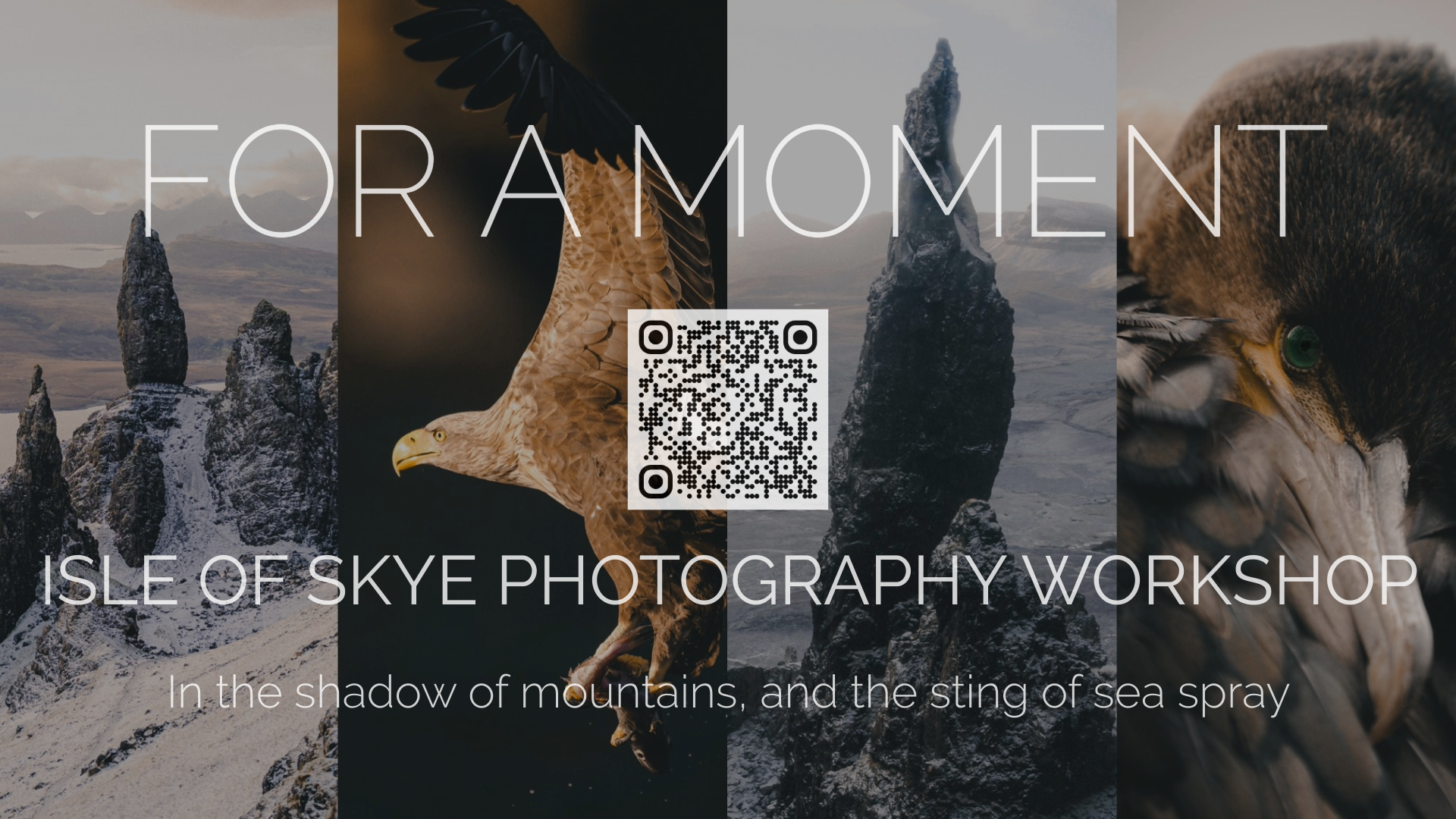
The poster was designed for use within a screening environment, functioning as both an introduction to the workshop and a holding image following the film. In this setting, the focus shifts away from explanation towards immediate recognition, requiring a format that can be understood quickly without active engagement.
Rather than presenting detailed information, the poster reinforces key identifiers such as title, location and visual tone, allowing it to function effectively within a passive viewing context. The inclusion of a QR code creates a transition between media, directing viewers towards the webpage where more immersive and detailed content is available. This supports the project’s wider multi-platform approach, where different outputs perform distinct communicative roles (Jenkins, 2006).
Overall, the poster demonstrates how communication changes depending on context. While other outputs focus on atmosphere, explanation or practical detail, the poster prioritises immediacy, accessibility and recognition.
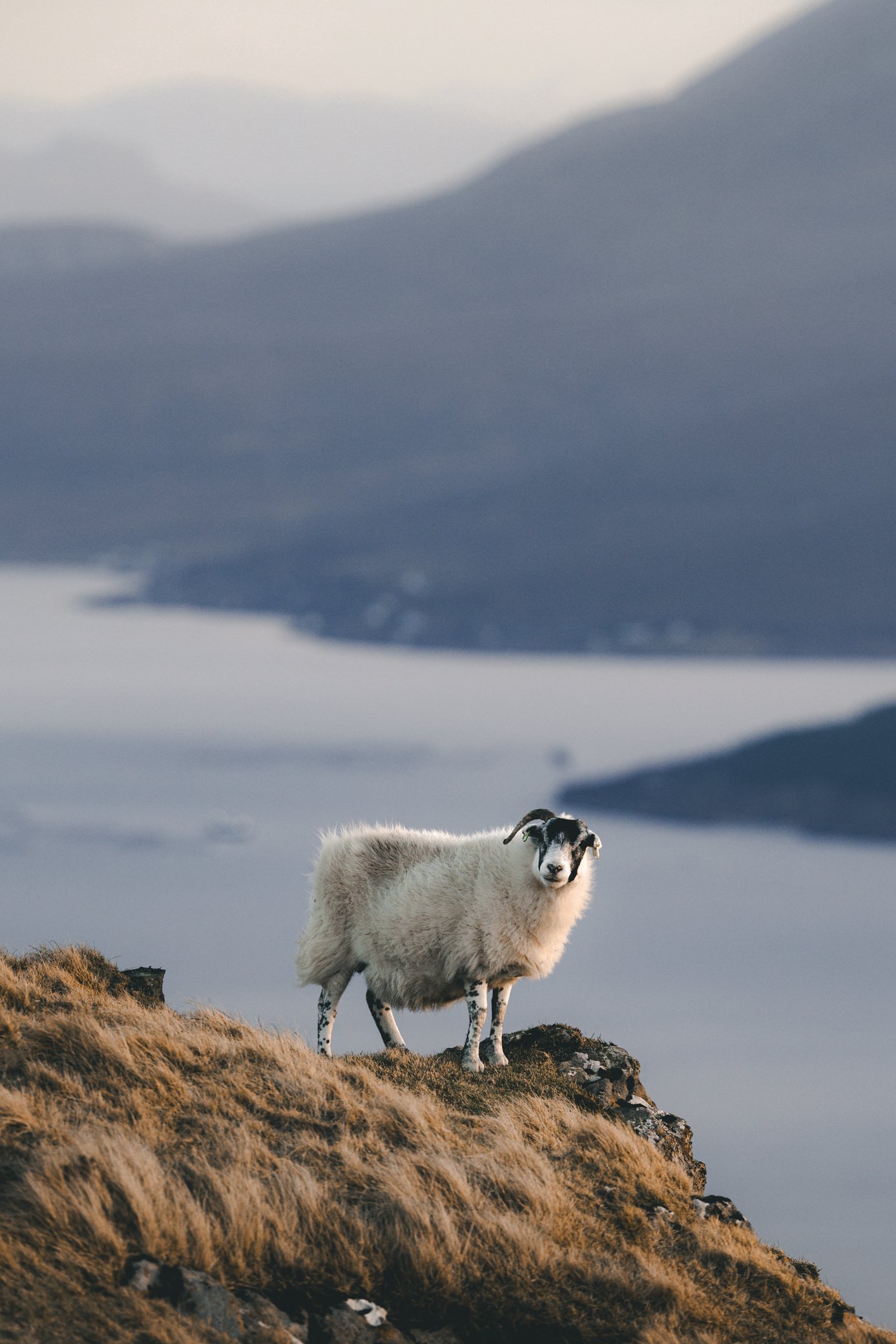
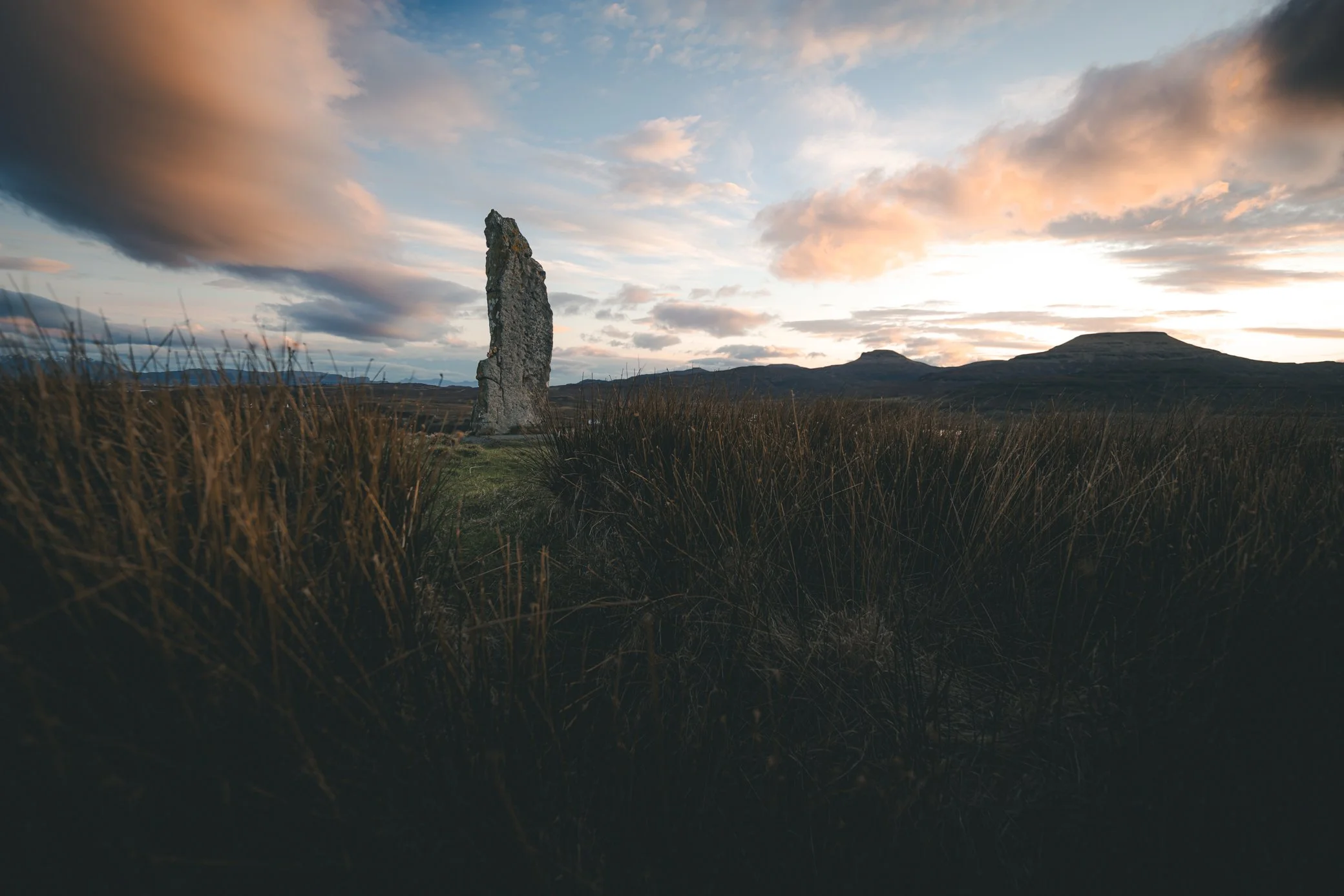
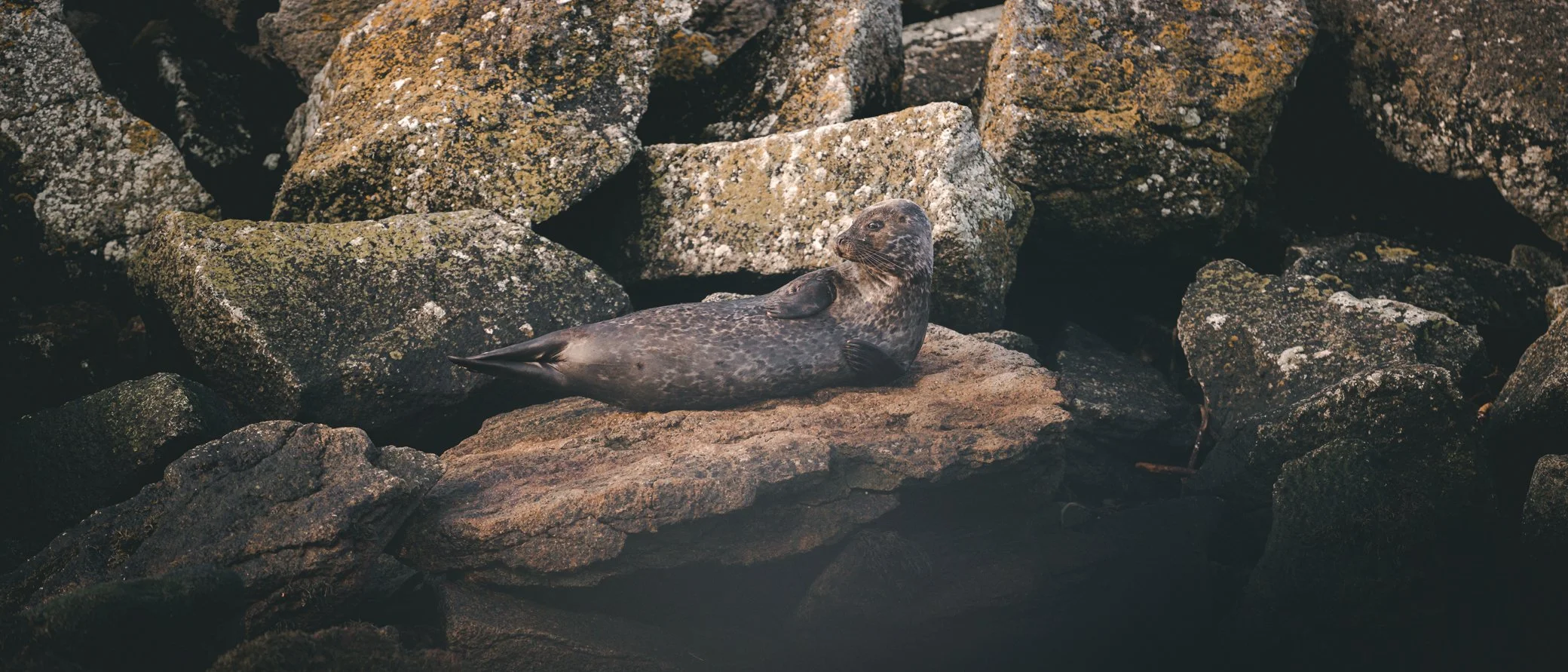
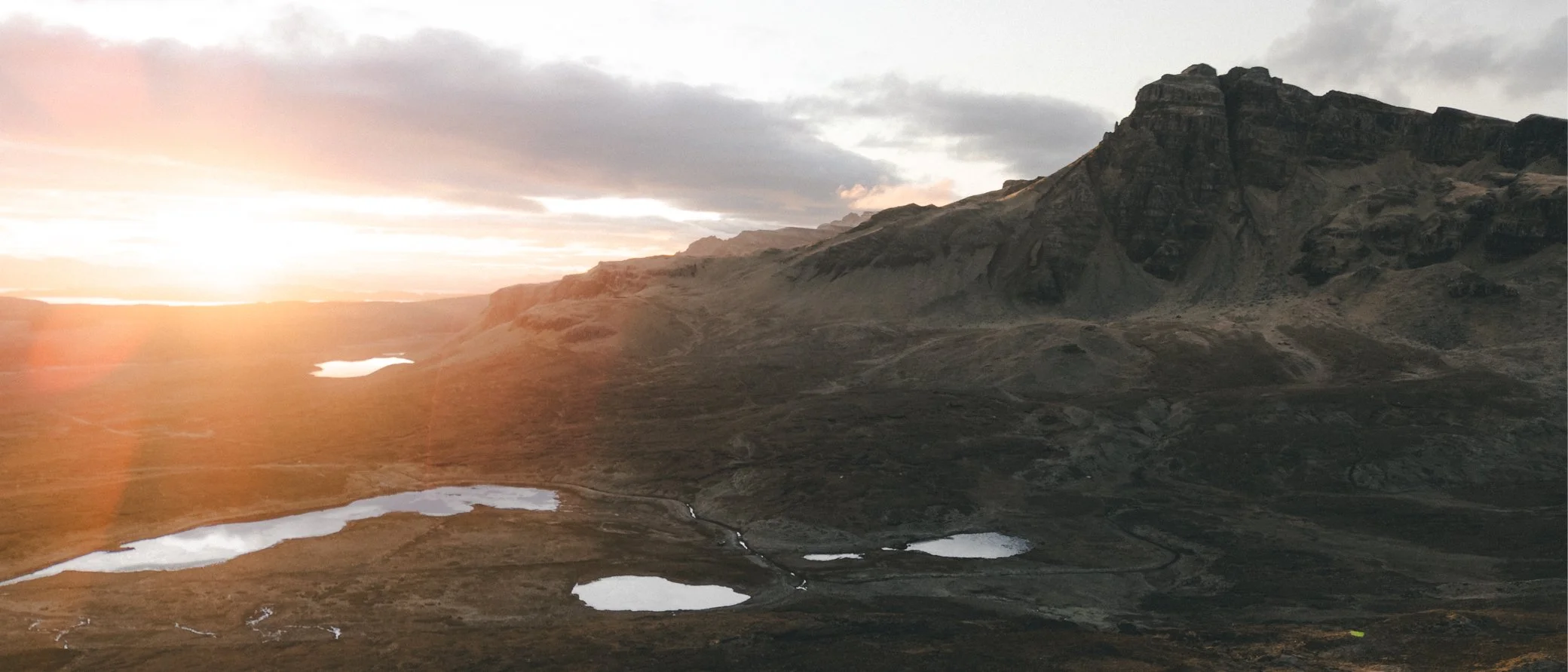
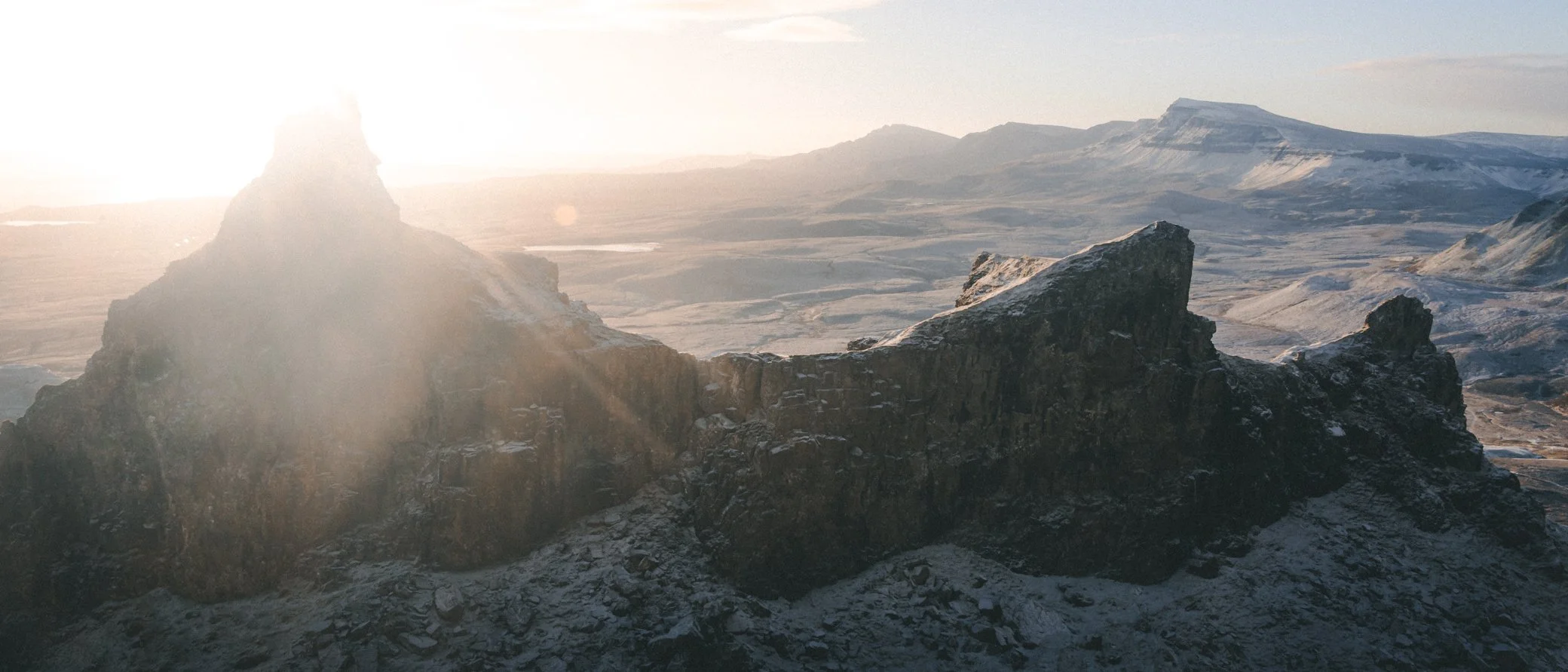
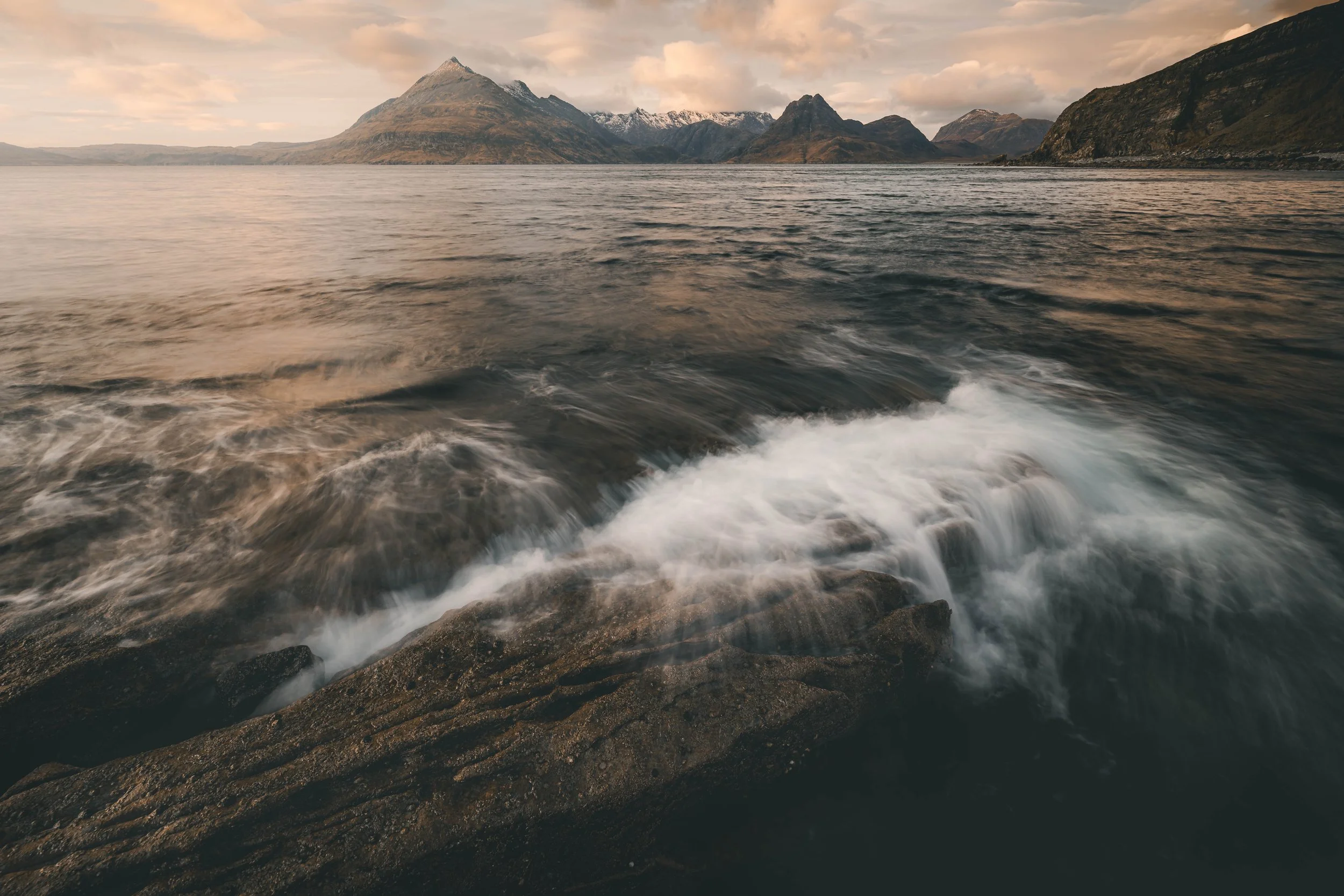
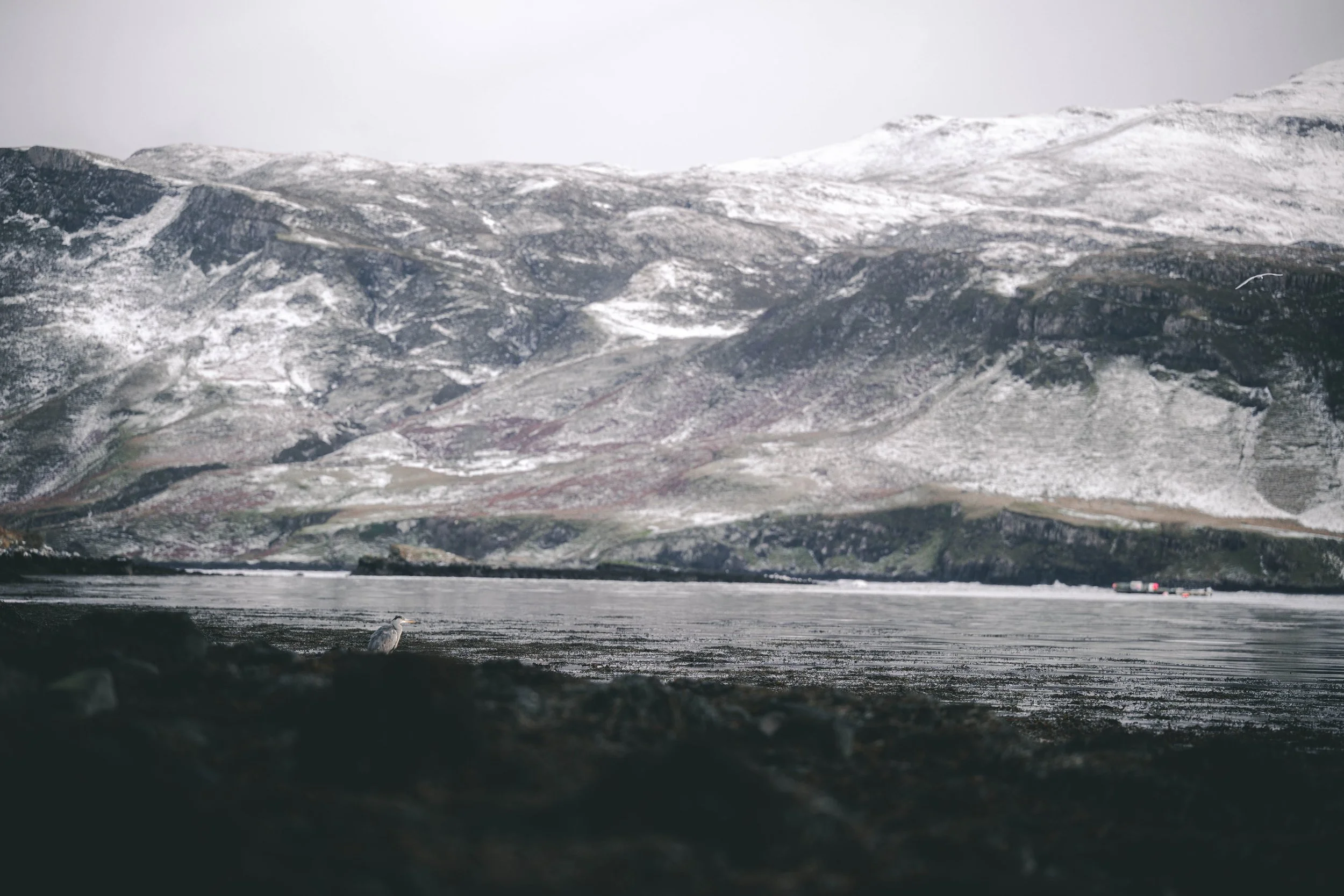
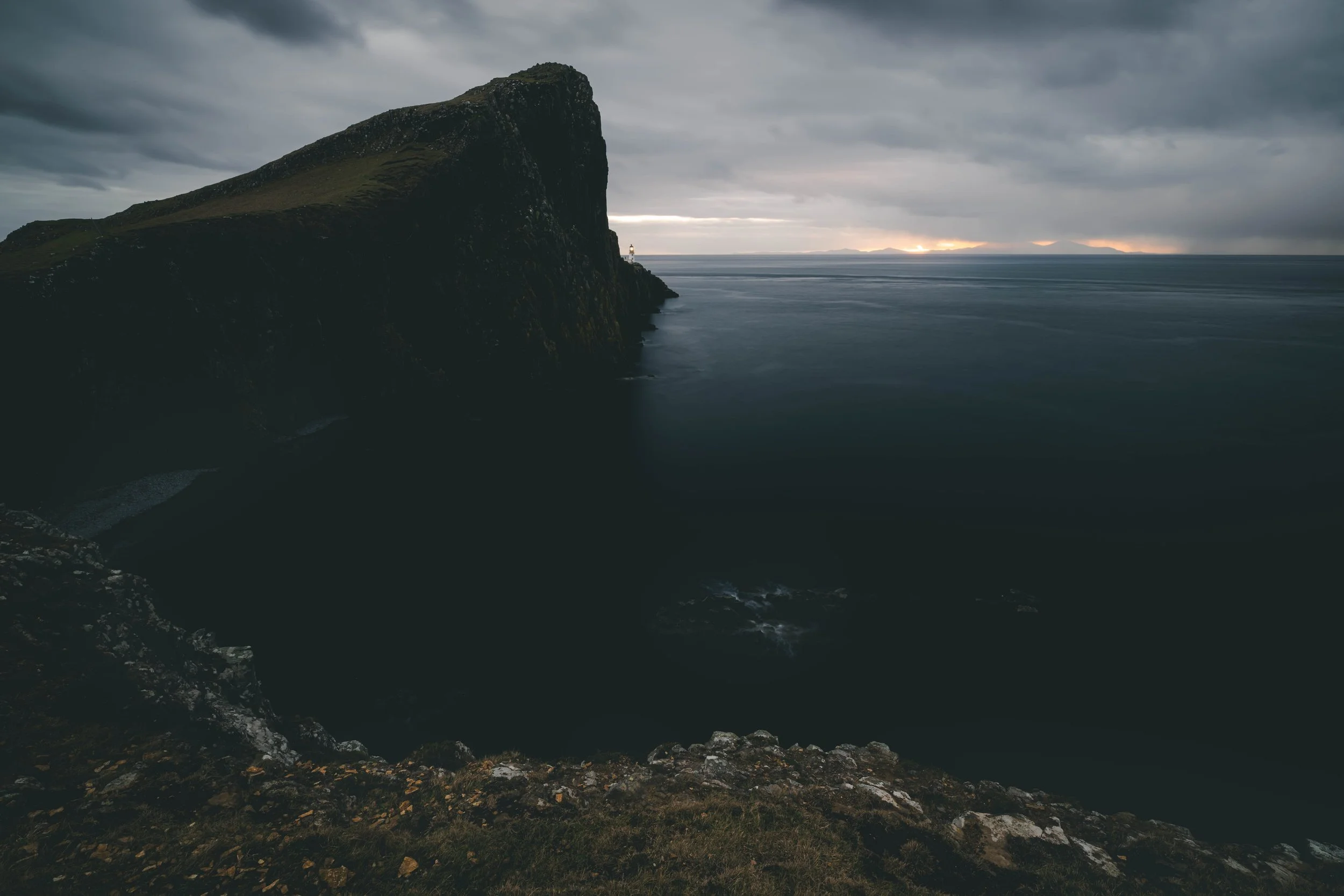
The photographic portfolio forms the visual foundation of the project, supporting outputs including the webpage, brochure and poster. The images were captured across multiple visits to the Isle of Skye during the same seasonal period as the proposed workshop, ensuring that they reflect the conditions and environments participants are likely to encounter.
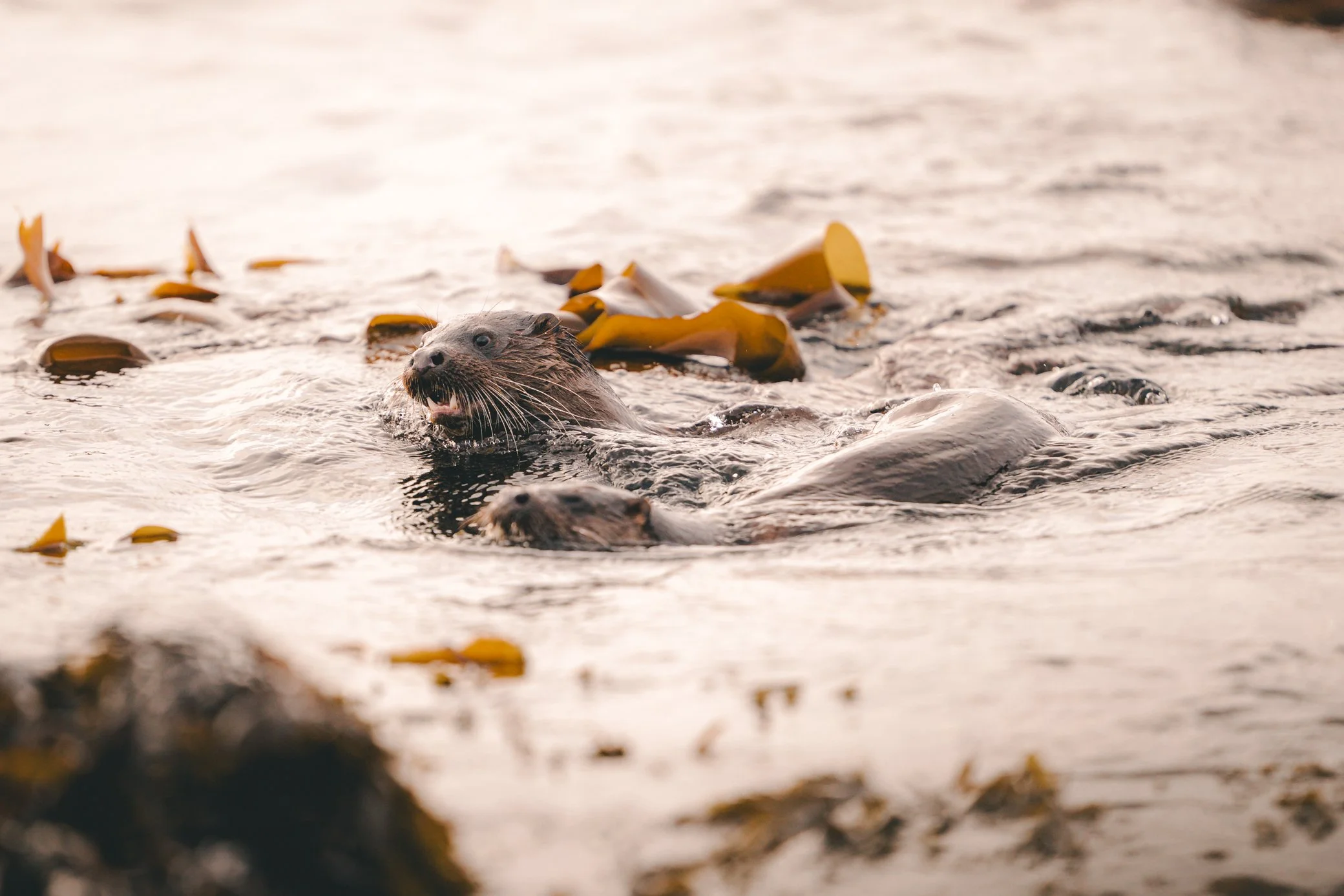
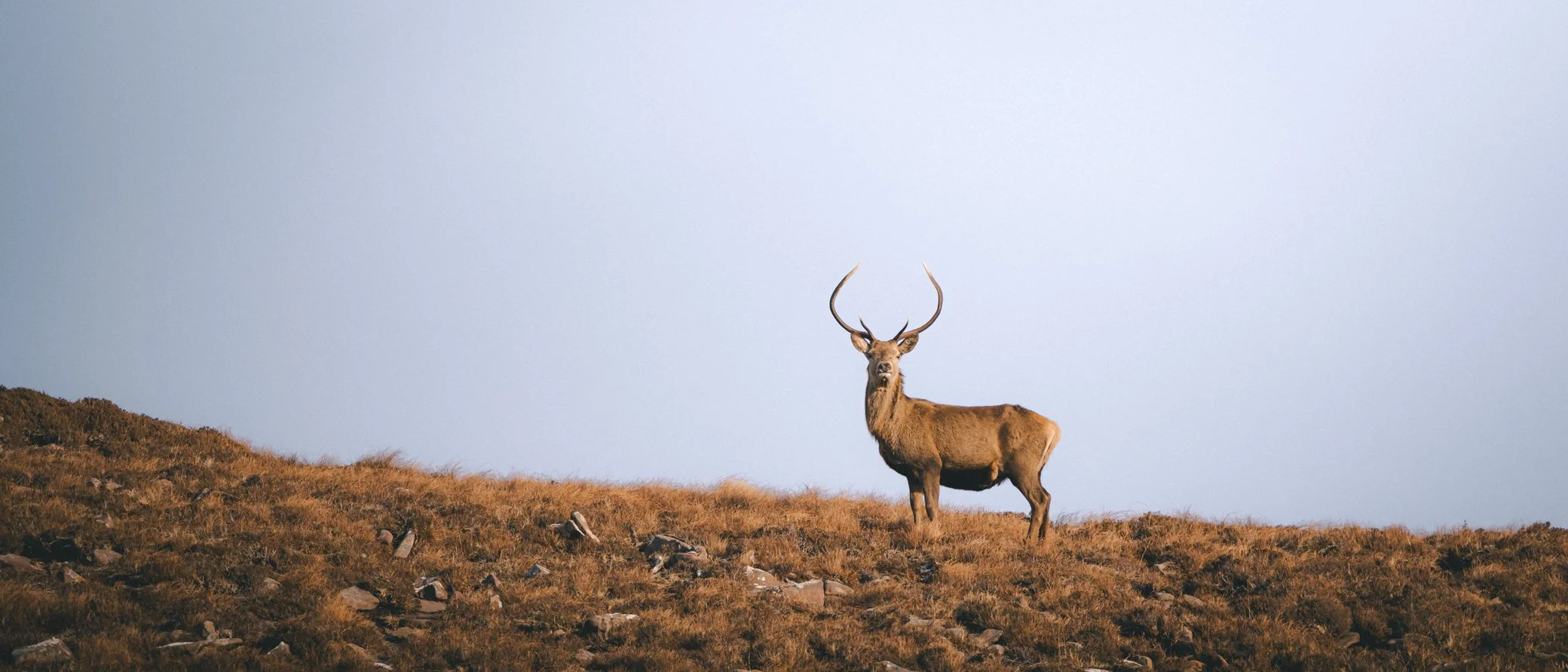
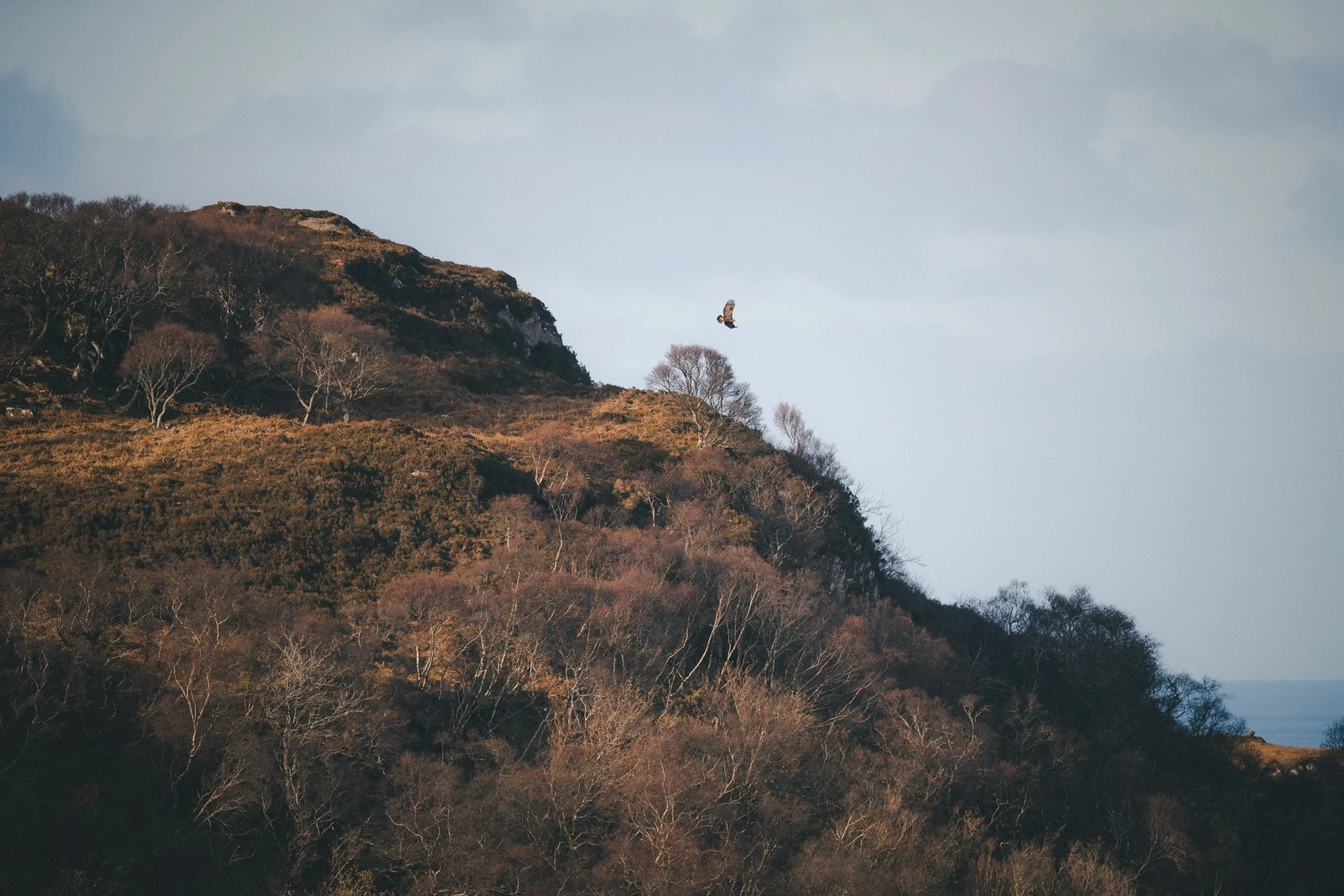
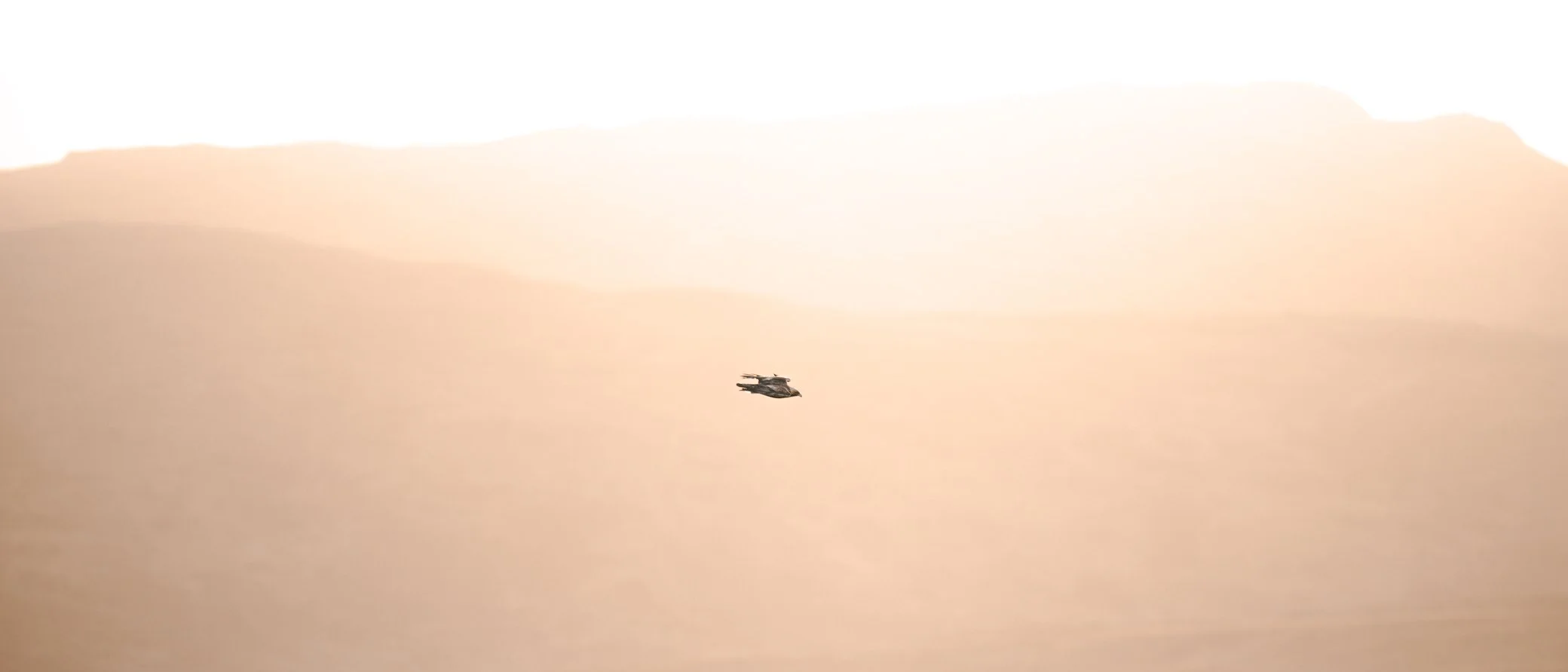
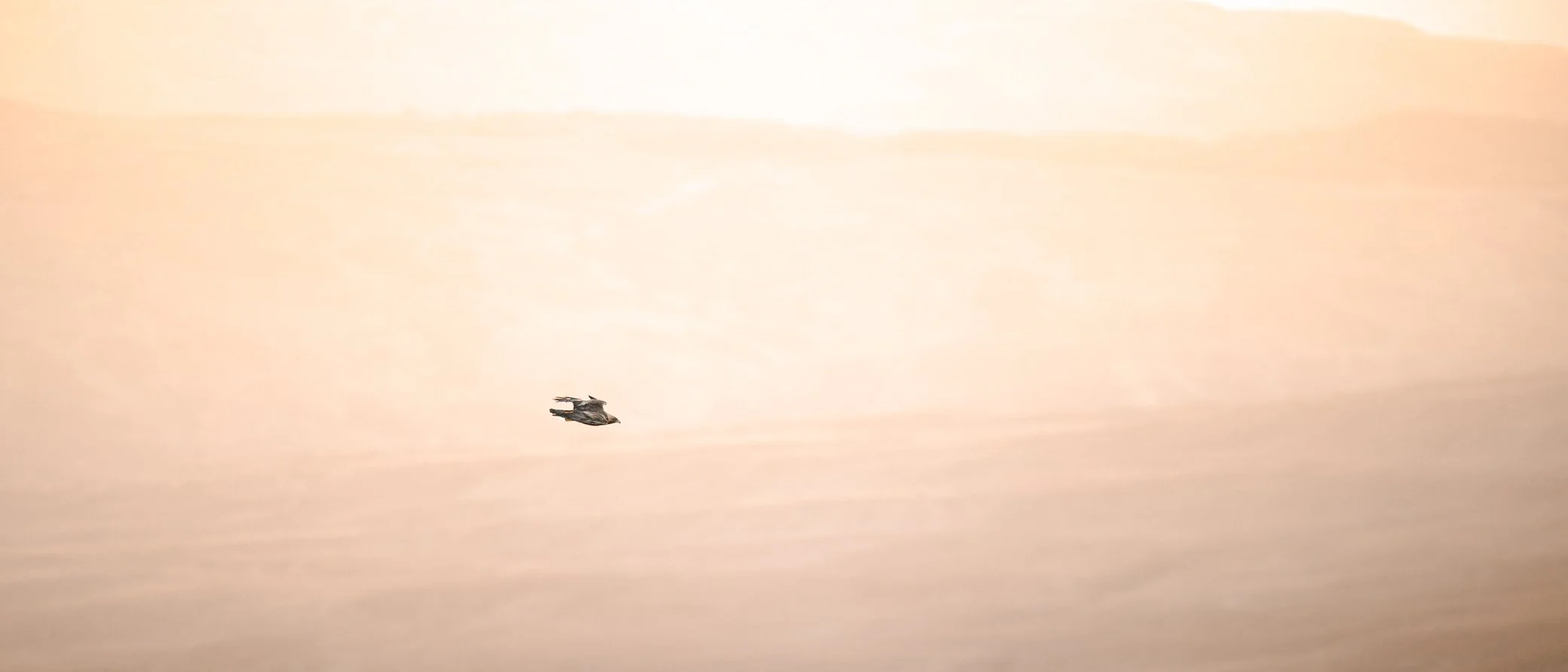
A key consideration during production was representing a range of environmental conditions rather than consistently idealised scenarios. The inclusion of snow, mist, rain and changing light reflects the unpredictable nature of the landscape, avoiding a version of the environment that feels overly controlled or visually exaggerated, which helped avoid presenting the landscape as consistently idealised or visually exaggerated.
The portfolio also maintains a deliberate balance between landscape and wildlife imagery. Rather than isolating subjects, many images position wildlife within the wider environment, reinforcing the idea that the workshop is centred on observing and responding to the landscape as a whole. This reflects the project’s wider focus on process, context and environmental awareness rather than purely outcome-based image making.
Consistency in visual tone was also important throughout the portfolio. The images share a restrained colour palette and natural grading approach, avoiding overly stylised editing while maintaining cohesion across the wider project. These images are used consistently throughout multiple outputs, helping unify the different media formats within the project’s broader multi-platform structure (Jenkins, 2006).
Overall, the photographic portfolio supports the wider aim of presenting the workshop as a grounded and experience led offering, using varied conditions, quieter moments and environmental context to communicate a more believable representation of the location and species.



































This section critically reflects on the development, effectiveness and wider findings of the project through self evaluation, audience feedback and reflective analysis. It considers how authenticity was communicated across different forms of media, how audiences interpreted the work and how the practical outcomes both supported and challenged the theoretical ideas explored throughout Element 1.
The section also reflects on the limitations of the authenticity framework developed during the project, the role of multiplatform storytelling within outdoor marketing and the tension between constructed media and perceived authenticity. Finally, it considers the personal and professional development that took place throughout both the project and the wider duration of the degree.
Beyond the Degree
Self Evaluation and Audience Feedback
Feedback
Conclusion
Through research, practical production and reflective evaluation, the project revealed that authenticity within outdoor marketing is far more complex than simply presenting “real” or unedited experiences. Instead, the findings suggested that authenticity is shaped through audience perception, creative construction and the relationship between interconnected forms of media. As the project developed, three key conclusions emerged. First, authentic feeling media often relies on deliberate construction and refinement rather than purely observational representation. Second, authenticity appeared to communicate more effectively through a connected multiplatform campaign than through isolated outputs alone. Finally, the project suggested that authenticity within marketing becomes most effective not when attempting to appeal to the widest possible audience, but when attracting audiences who are philosophically and creatively aligned with the values, pacing and experience being communicated.
Constructing Authenticity
Authenticity Through Multiplatform Communication
Rethinking Effective Marketing
Element 3
Reflection and Conclusion
When I began the Adventure Filmmaking degree in 2020, my intention was to develop the skills needed to tell personal stories through film while also exploring how photography and media could become a long term professional career. This direction was later outlined clearly within my 2024 Personal Development Plan (Phillips, 2024), where I identified goals surrounding nature photography workshops, storytelling, teaching, public speaking and future collaboration with established brands within the industry. I also identified authenticity as an important direction for my work, particularly in relation to how experiences and environments are represented through media.
At the beginning of the course, I found academic work particularly challenging and often lacked confidence in my ability to independently structure, develop and complete academic assignments. Much of my early academic work relied heavily on support from my partner, particularly in relation to organisation, structure and confidence surrounding assessment. Throughout the degree, I gradually developed strategies that allowed me to work more independently and approach both academic and creative challenges with far greater confidence. While I still value feedback and collaboration, I now feel capable of independently planning, researching and completing complex projects in ways that would have felt completely unachievable at the beginning of the course. In many ways, this became one of the most significant personal achievements of the degree itself.
The degree also coincided with some of the most challenging and transformative years of my personal life. Throughout the course, I balanced academic work alongside the pressures of running a business, periods of personal difficulty and major life changes, including becoming a father. Reflecting on the degree as a whole, one of the things I feel most proud of is simply that I continued and saw it through to the end. Earlier in life, I often viewed myself as somebody who gave up on things or struggled to maintain long term focus. Completing the degree therefore represents far more than gaining a qualification. It represents six years of persistence, adaptation and personal growth through periods of significant change and responsibility. There is also something particularly meaningful in the timing of this final stage of the degree, with my son turning one year old the day after the end of year show itself. In many ways, the degree feels tied not only to my own development, but also to a major transition into a completely new stage of life.
Alongside this personal development, the course fundamentally changed the way I understand storytelling, communication and audience engagement. Earlier projects often focused heavily on technical execution, visuals or image quality, whereas later work increasingly prioritised emotional communication, atmosphere and audience interpretation. The degree gradually shifted my understanding of media away from simply producing visually impressive content and towards creating work that communicates emotion, lived experience and personal perspective in more meaningful ways. This final project particularly reinforced the importance of authenticity, not only within storytelling itself, but also within branding, marketing and audience connection.
The degree also gave me a much broader understanding of learning, reflection and professional practice that extends beyond filmmaking alone. Through both practical and academic modules, I developed an understanding of reflective learning cycles, audience interpretation, multiplatform communication and creative research that will directly influence the way I approach future teaching and workshop leadership. Earlier in the degree, I primarily viewed photography workshops as opportunities to teach technical camera skills or help people achieve stronger images. However, I now understand them more holistically as experiences centred around communication, confidence, emotional connection, fieldcraft, reflection and personal growth in nature. The academic understanding gained throughout the course therefore feels more important to my future practice as the technical filmmaking or photography skills themselves.
Perhaps most importantly, the degree gave me confidence in areas where I previously lacked it entirely. Throughout the course, I became increasingly comfortable presenting ideas publicly, speaking to groups, leading discussions and engaging with professional feedback in ways that once felt intimidating. This has become particularly significant moving forward, as many of my long term ambitions now involve teaching, workshop leadership and collaborative creative work within the outdoor and photography industries.
Looking back at the body of work selected for the end of year show, I realised that each project represents a different aspect of what the degree ultimately helped me develop. The Isle of Skye workshop project reflects the entrepreneurial and educational direction of my practice, combining storytelling, branding and emotional communication in a way that feels closely connected to my future ambitions. The Nikon project reflects growing confidence in producing work professionally with brands that have facilitated my creative practice and formed part of my journey as a photographer and filmmaker. In contrast, the film created for my son represents the most personal aspect of my filmmaking, focusing on memory, reflection and legacy rather than external expectations or commercial outcomes.
Together, these projects represent far more than technical progression. They reflect six years of gradual personal, academic and creative development that significantly changed how I see myself as both a filmmaker and communicator. More than anything, the degree reinforced the importance of creating work that feels emotionally honest, personally meaningful and aligned with the type of experiences, audiences and conversations I hope to continue building beyond university.
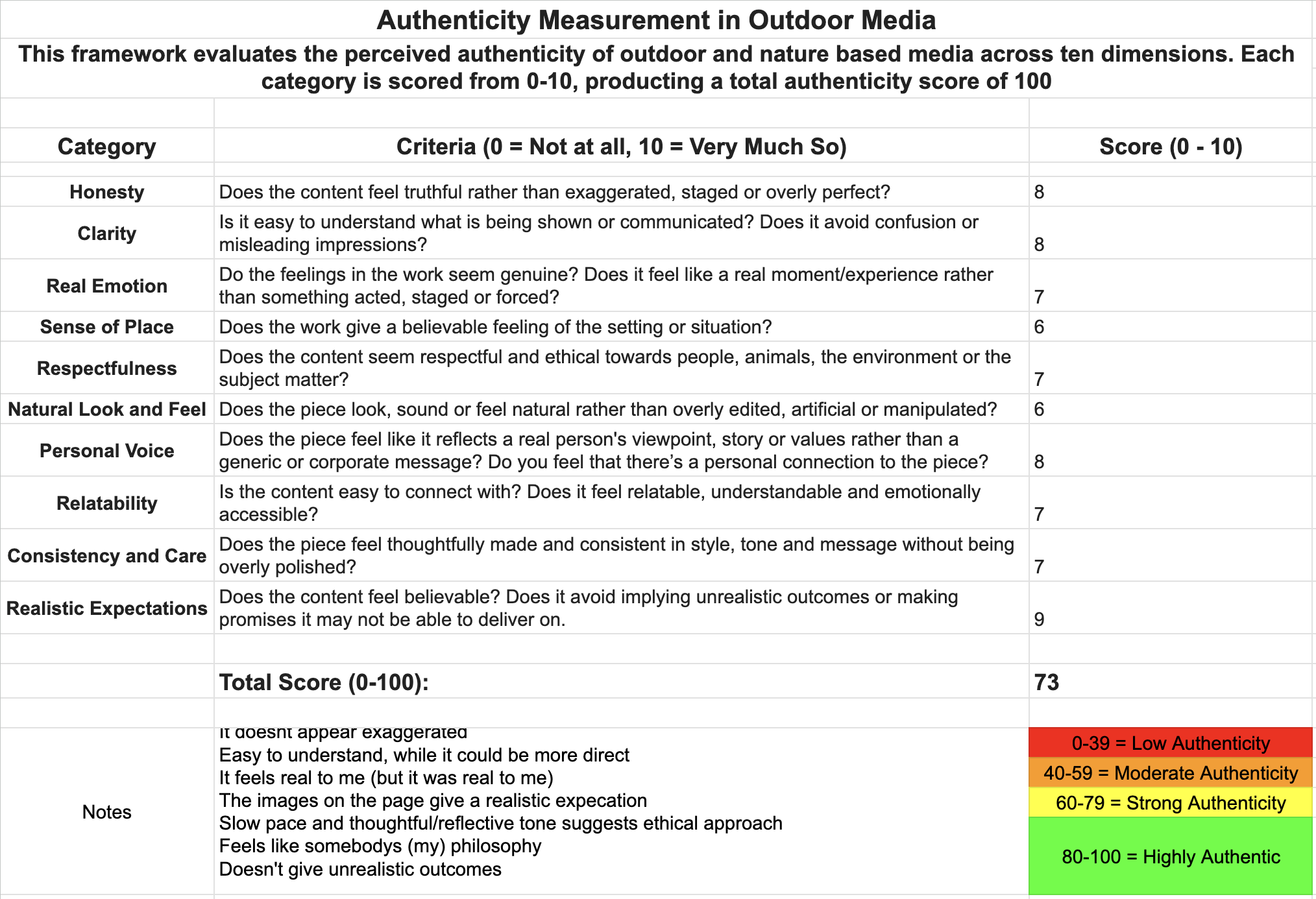
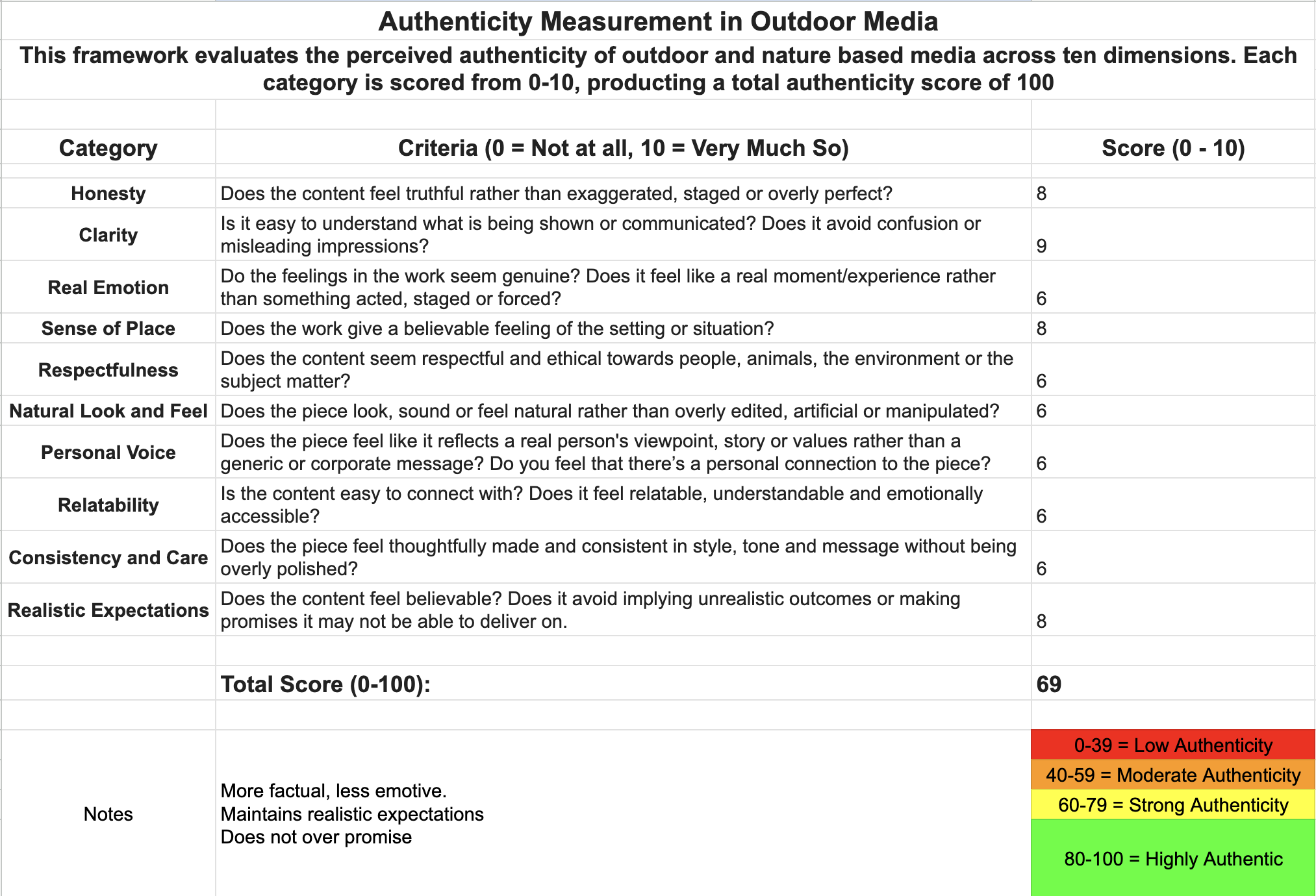
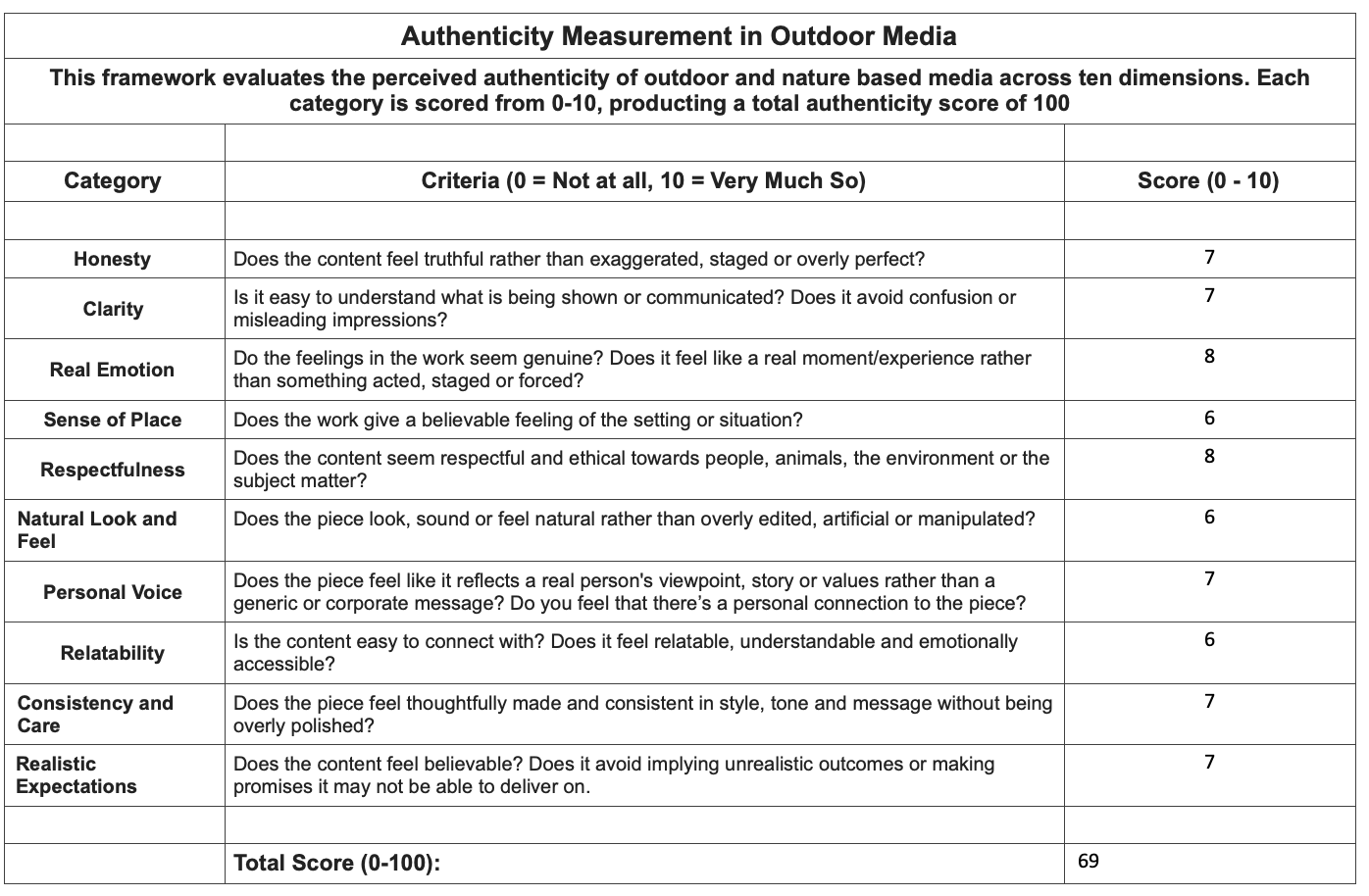
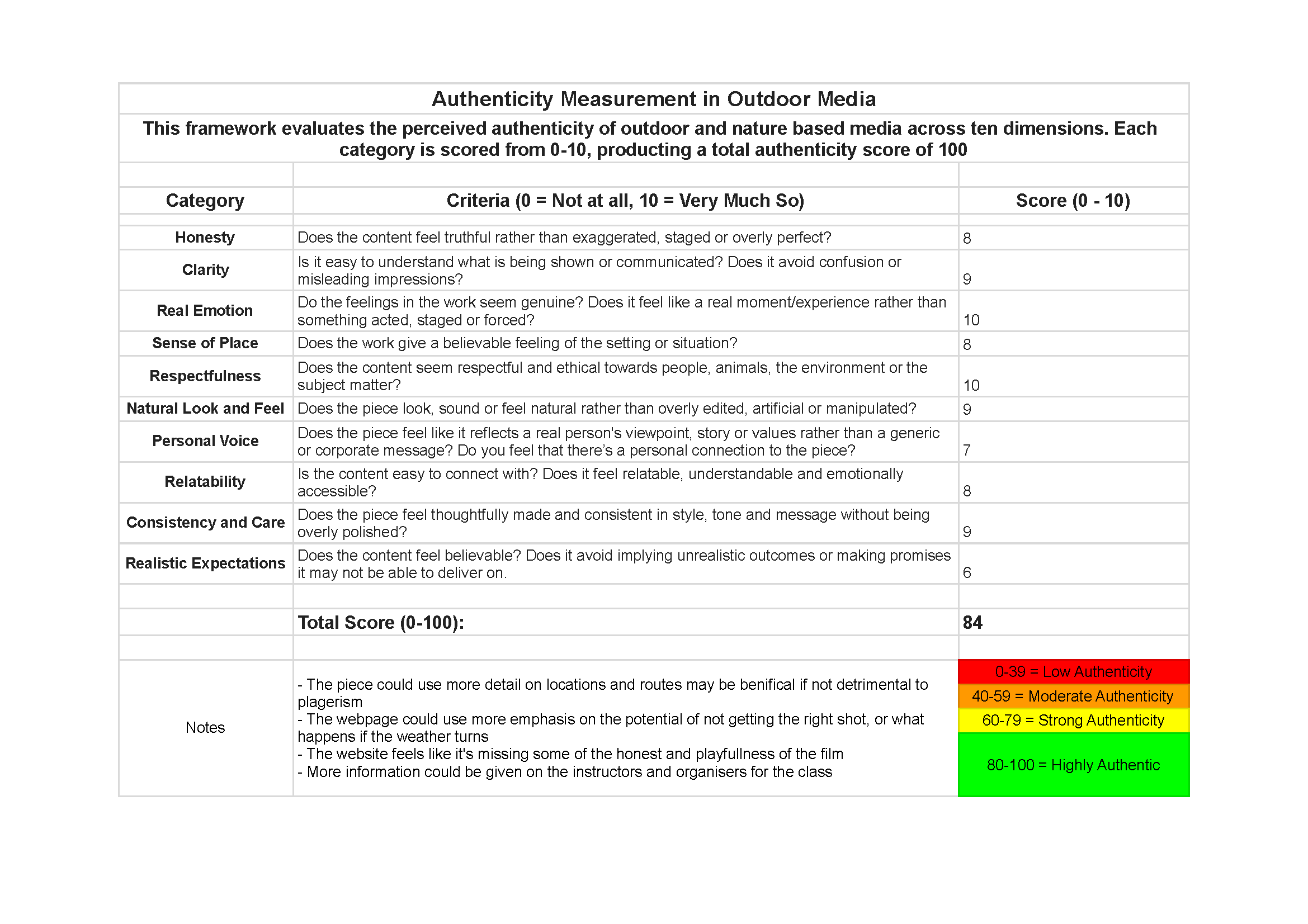
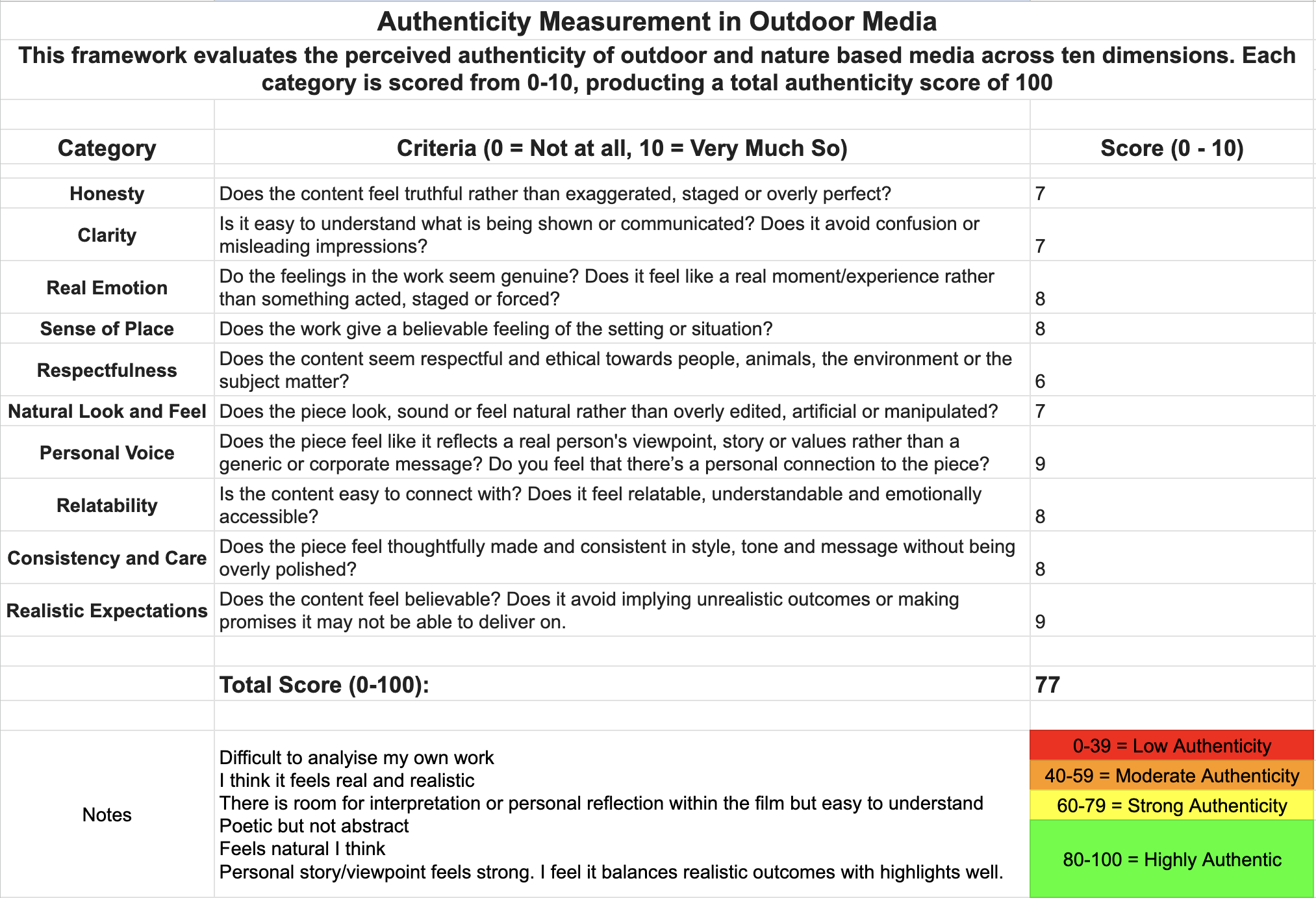
Following the completion of the practical work for this project, I applied my authenticity index to each media created. While this evaluation remains subjective due to my position as creator of the work, the process provided an opportunity to critically reflect on how different forms of media communicated authenticity, emotional realism and credibility.
Webpage
Brochure

Film
Poster

Gallery
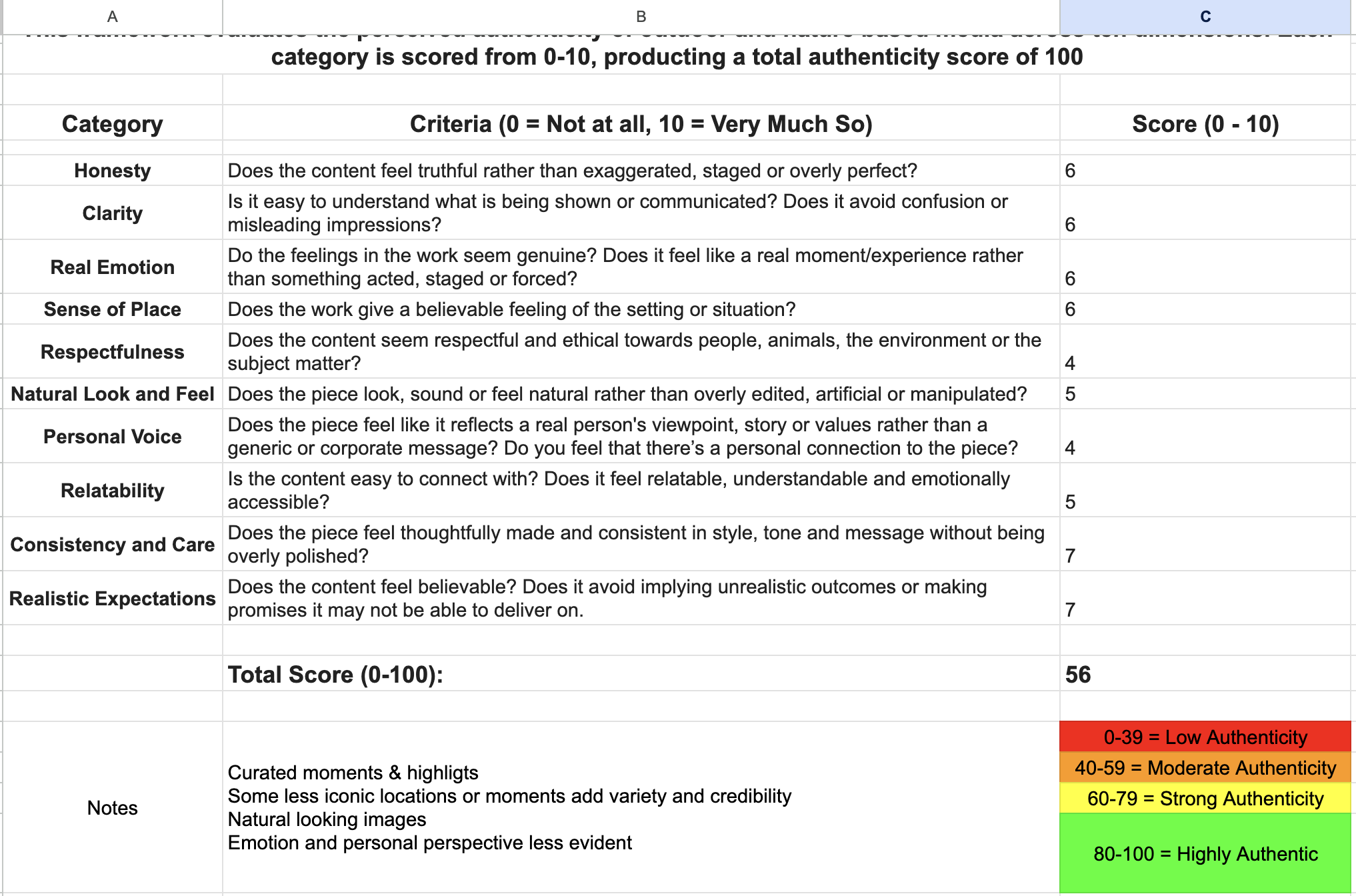
The scores revealed that different forms of media communicated authenticity in different ways depending on their communicative role and intended purpose.
Jonathan Pugh - Assistant Academic Director: Quality, Design and Performing Industries. UWTSD
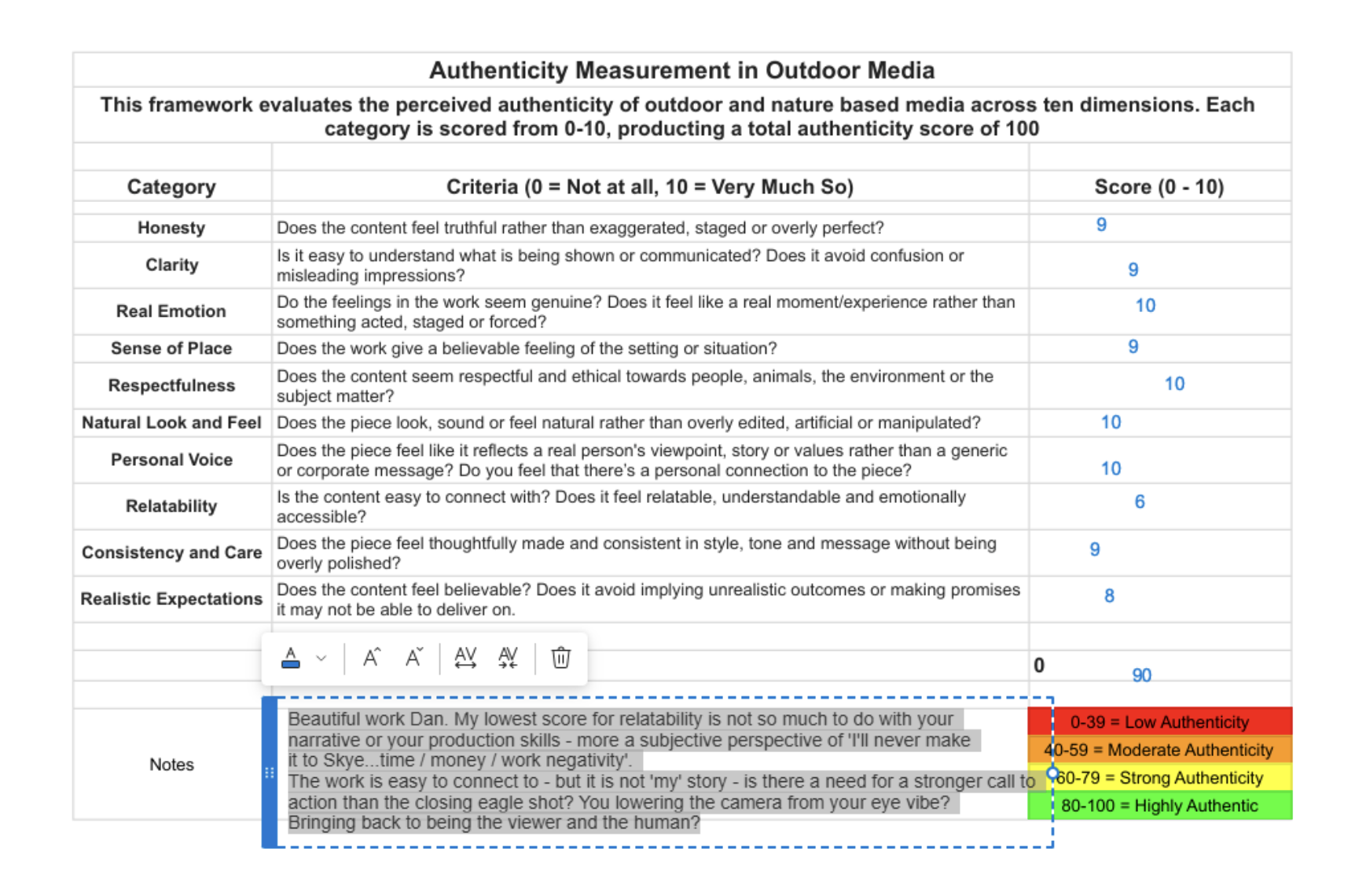
Jonathan Pugh’s feedback reinforced several of the project’s wider findings surrounding audience interpretation and relatability. While the work received a high overall authenticity score of 90, Pugh’s lower score in relatability highlighted how perceived authenticity can still be influenced by personal circumstance and audience context rather than production quality alone. He explained that his response was shaped less by the work itself and more by feelings surrounding the accessibility of the experience, including time, cost and the perception that travelling to Skye may not feel achievable for some audiences. This became an important reflection within the project, suggesting that emotional authenticity and relatability are not always interchangeable concepts.
Pugh also questioned whether the ending of the film required a stronger call to action or a more direct return to the viewer’s perspective, suggesting that lowering the camera from my eye at the end of the film may have created a stronger sense of human connection. This feedback reinforced the idea that while atmosphere and emotional immersion were communicated effectively, the transition between reflective storytelling and audience invitation could potentially be developed further. Collectively, his feedback supported the project’s wider conclusion that authenticity is shaped not only through sincerity and emotional realism, but through how audiences position themselves in relation to the experience being represented.
Emma Phillips - Family
Emma’s feedback resulted in a total score of 74, placing the work within the “strong authenticity” category of the framework. The scores remained relatively consistent across all categories, suggesting that the project communicated a broadly coherent and believable tone rather than relying on one particularly dominant element.
It is also important to acknowledge that Emma is my sister, which may have influenced aspects of the evaluation. As someone already familiar with my personality, values and creative approach, she may have been more likely to perceive sincerity and personal connection within the work, particularly in categories such as honesty and personal voice. This became another reminder that audience interpretation of authenticity is often shaped by familiarity and personal context rather than by the media alone.
Liam O’Hara - Media Demonstrator. UWTSD
Liam said:
“Theres a few things to unpack. I will try to be as concise as I can, but I shall be fairly critical also.
I don’t think there is anything objectively bad about the webpage or the film as individual pieces I will say that your images are incredible and the film is also very nice.
However, for the objective of the webpage, I think for me personally it’s slightly off the mark.
My OCD makes looking at the placement of the images a little frustrating as they aren’t in line or order. Same with the film its imbedded slightly over the grey line. This is a personal issue most people probably won’t have this opinion, but I did notice it almost straight away and you may have others get a similar feeling. This is a design choice so please don’t take it as a complaint its preference.
The main point which I think lowered my overall mark for the content was to do with authenticity. I think you have amazing images and you have written a good write up but I’m also aware on what you shoot on. You discuss in writing about recommended kit and you will work around what people have got themselves which is great to see as it opens the door but I almost would like to see you have gone out there with a cheaper camera and shown maybe a few images captured using lower quality devices in a budget friendly range. Like a shot on Z5II sort of example type thing so as a customer I could link it to something I may own and know my expectations just making that bit more relatable. I think it would just build that connection with the people signing up before having a chat.
Also along the lines of clarity, I was expecting to see more images of the place you would be staying general feel for the area and local images of camping or broader parts of the trip. That would make me understand exactly what is going on during my time and what I am also paying for.
As for general comments about layout also.
The links in the top right for about and contact and such. I completely missed them on my first look through the page they could do with being a bit more obvious on the isle of skye part.
I’m not sure if the 3rd image is your strongest image to use specifically for the first thing someone looks at for the trip it doesn’t have the same wow factor as the other images in the line.
In your selection of images at the bottom of the page there seems to be a number of double up images which I would expect to not be there and have more about again the activities side of things instead?
On your video page there is a video that is showing as unavailable if you haven’t seen it yet. You might want to check up on that.
I would loved to have seen your for a moment video and then another video just talking in a raw format piece to camera what to expect from the trip. It will let people meet you indirectly and also give a compiled piece of information at the same time. I wouldn’t feel super confident going on a trip with a person I haven’t seen before in a natural way.”
Liam’s feedback focused primarily on the practical accessibility and usability of the project rather than its emotional tone. His comments highlighted areas where the multiplatform experience could be strengthened further, including making apparent webpage layout consistency across different screen sizes, repeated imagery and the balance between atmospheric storytelling and practical clarity.
He also raised questions surrounding the perceived accessibility of the workshop in relation to camera equipment and image quality expectations. This introduced a useful perspective on how audiences may interpret professional imagery and the potential barriers this can create for some viewers. Overall, Liam’s feedback broadened the evaluation beyond emotional authenticity alone, highlighting the importance of usability, clarity and audience perception within multiplatform outdoor marketing.
Liam Brown - Friend
Liam Brown’s feedback was largely positive, resulting in one of the highest overall authenticity scores received (84/100). He responded particularly strongly to the emotional realism and natural feel of the project, while also identifying areas where the webpage could communicate more uncertainty and personality. He suggested that the film conveyed a stronger sense of honesty and playfulness than the webpage itself. As a friend already familiar with my creative work and values, his interpretation may have been influenced by an existing understanding of my intentions, potentially contributing to stronger scores in areas relating to authenticity and emotional connection.
Gareth Llewellyn - Professional Photographer and Workshop Provider
Critical Reflection on Feedback, Authenticity and Media
Critical Reflection of Self Evaluation and Audience Feedback
Gareth said:
“I should probably mention that I know these locations, so that naturally shapes how I respond to the visuals. The images feel very much in line with what I would hope for and expect from these places, which is a real positive, but also worth keeping in mind as my response may be slightly more personally invested than someone seeing them for the first time.
Overall, I think the presentation works really well. I got a strong sense of the balance between landscape and wildlife before even reading into the details fully, which says a lot about the strength of the visuals and the video. The images, especially with some knowledge of the locations, absolutely help sell the workshop.
The clearest strength for me is the way the workshop is framed around changing people’s approach to photography and image-making. That really connects with me, and it feels like strong, meaningful language rather than just a list of features.
In terms of clarity, it does a very good job of explaining what’s included, where it takes place, how long it runs for, and what people will need to take part. The duration of the workshop also feels right to me.
I have very little to criticise. My only small note would be that the pace of the video could maybe be a touch quicker, or trimmed slightly from a selling point of view. That said, with landscape and wildlife as the subjects, you could also easily argue that the slower pace fits the feeling of the workshop perfectly.”
Samuel Higgins - Industry Professional & DOP
Sam Higgins’ feedback broadly reinforced many of the themes identified elsewhere throughout the audience evaluation. He responded positively to the overall atmosphere, emotional tone and perceived authenticity of the project, describing the workshop as feeling more like “booking an adventure rather than a process”. However, similar to feedback from Liam Brown and Liam O’Hara, he also highlighted the value of including more practical and transparent information surrounding how the workshop would actually operate in practice. In particular, Sam suggested that more imagery of different conditions, additional information aimed at less experienced photographers and clearer explanations of what participants would realistically experience may help strengthen relatability and expectation management further.
Sam also noted that client testimonials would likely increase trust and authenticity within the webpage, particularly because audiences would be hearing directly from previous participants rather than solely from the creator of the workshop itself. This became another useful reflection point, as testimonial based content could help balance the more cinematic and reflective aspects of the campaign with forms of social proof and lived experience from participants themselves.
Another particularly useful observation related to the downloadable brochure. Sam explained that he is generally hesitant to download external files from websites and would personally prefer more practical information to exist directly within the webpage itself. This highlighted another important consideration surrounding audience trust, accessibility and user behaviour within digital marketing. While the downloadable brochure was intended to strengthen the multiplatform nature of the campaign, the feedback suggested that separating key practical information into external documents may unintentionally create friction or hesitation for some users.
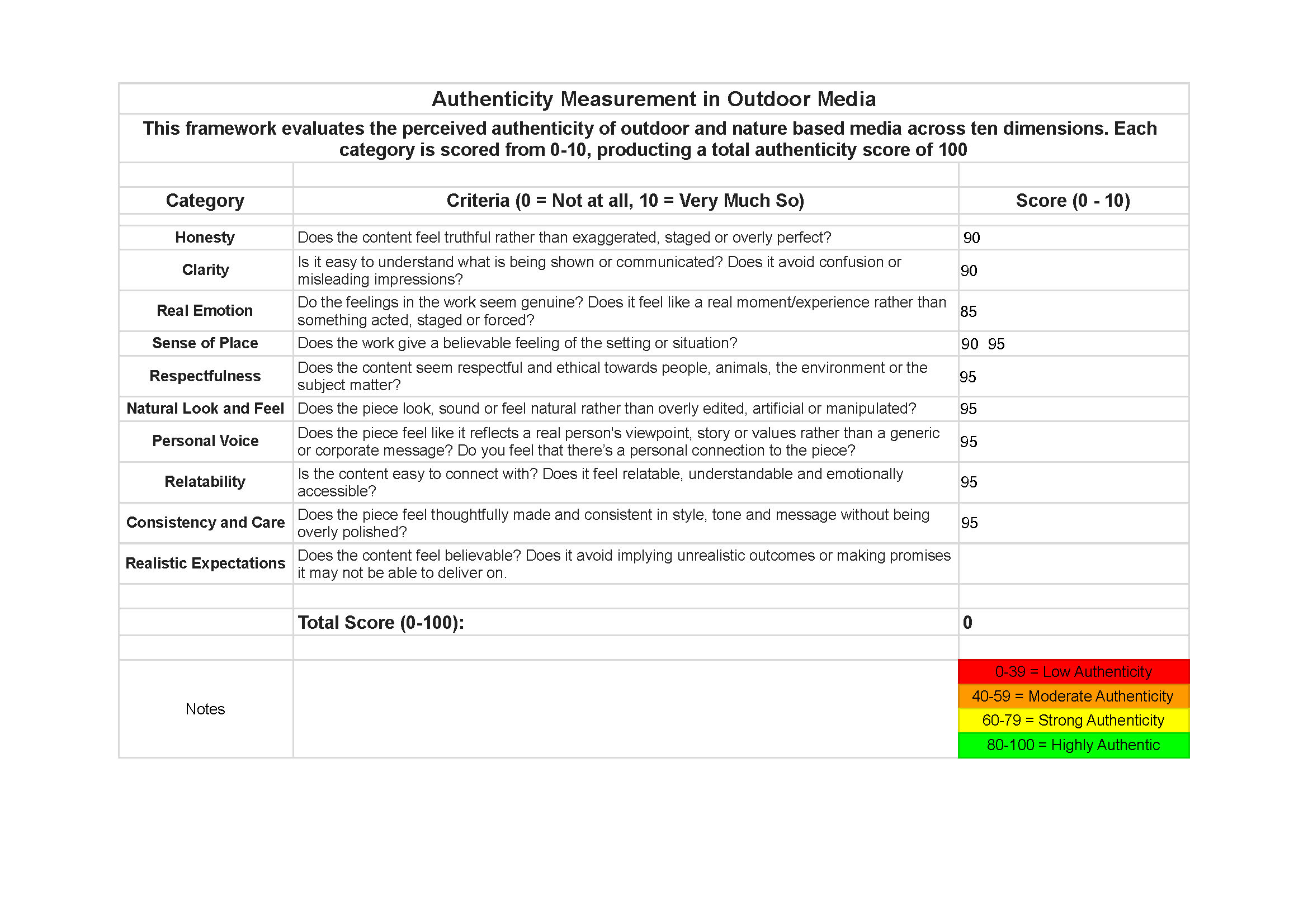
Gareth Llewellyn’s feedback was overwhelmingly positive, particularly in relation to the emotional framing, clarity and visual representation of the workshop experience. He responded strongly to the balance between landscape and wildlife imagery, noting that the visuals successfully communicated the tone and intention of the workshop before engaging fully with the written details. Llewellyn also highlighted the emphasis on changing participants’ approach to photography and image making as one of the project’s strongest elements, suggesting that the workshop felt centred around meaningful experience rather than purely technical outcomes. However, he also acknowledged that his familiarity with the locations may have influenced his response to the visuals and atmosphere, potentially creating a stronger emotional connection than audiences unfamiliar with the Scottish Highlands. His only significant criticism related to the pacing of the film, suggesting that a slightly shorter or faster edit may have strengthened its effectiveness from a marketing perspective, while also recognising that the slower pacing aligned naturally with the tone of landscape and wildlife photography itself.
The feedback also exposed a small practical limitation within the authenticity framework itself, as Llewellyn interpreted the scoring system as being out of 100 rather than out of 10. While the scores could still be converted and interpreted effectively, this suggested that the framework instructions or visual layout may need refining in future to ensure greater clarity and consistency when gathering audience responses from a wider range of participants.

Audience feedback reinforced the idea that authenticity was not interpreted evenly across the different outputs. Jonathan Pugh responded positively to the emotional tone and visual quality of the project, while also noting that relatability was reduced by his own perception that the experience felt financially or practically inaccessible. He also questioned whether the ending could include a stronger human connection or call to action. Similarly, Liam Brown suggested that the film communicated more honesty and personality than the webpage, despite the webpage providing greater clarity and structure. These responses aligned with tensions identified in Element 1 around emotional authenticity, accessibility and audience interpretation, but also challenged the assumption that emotional engagement alone is enough to create effective marketing.
Feedback also complicated my early assumption that imperfection would automatically increase authenticity. During production, I considered including more imperfect or observational moments to avoid an overly polished representation of the experience. This connected to research in Element 1 around transparency, naturalness and audience distrust of overly curated media (Gaden and Dumitrica, 2015; Stackla, 2019). However, feedback from Matt Jones, Liam O’Hara, Brett Aggersberg and Marc Pugh-Jones suggested that certain moments, including a shot where I slipped while walking - which was removed from earlier iterations, distracted from the tone and professionalism of the film rather than making it feel more authentic. This was an important limitation in my thinking, as it showed that authenticity is not created simply by including flaws. Imperfection only strengthens authenticity when it supports tone, meaning and audience connection.
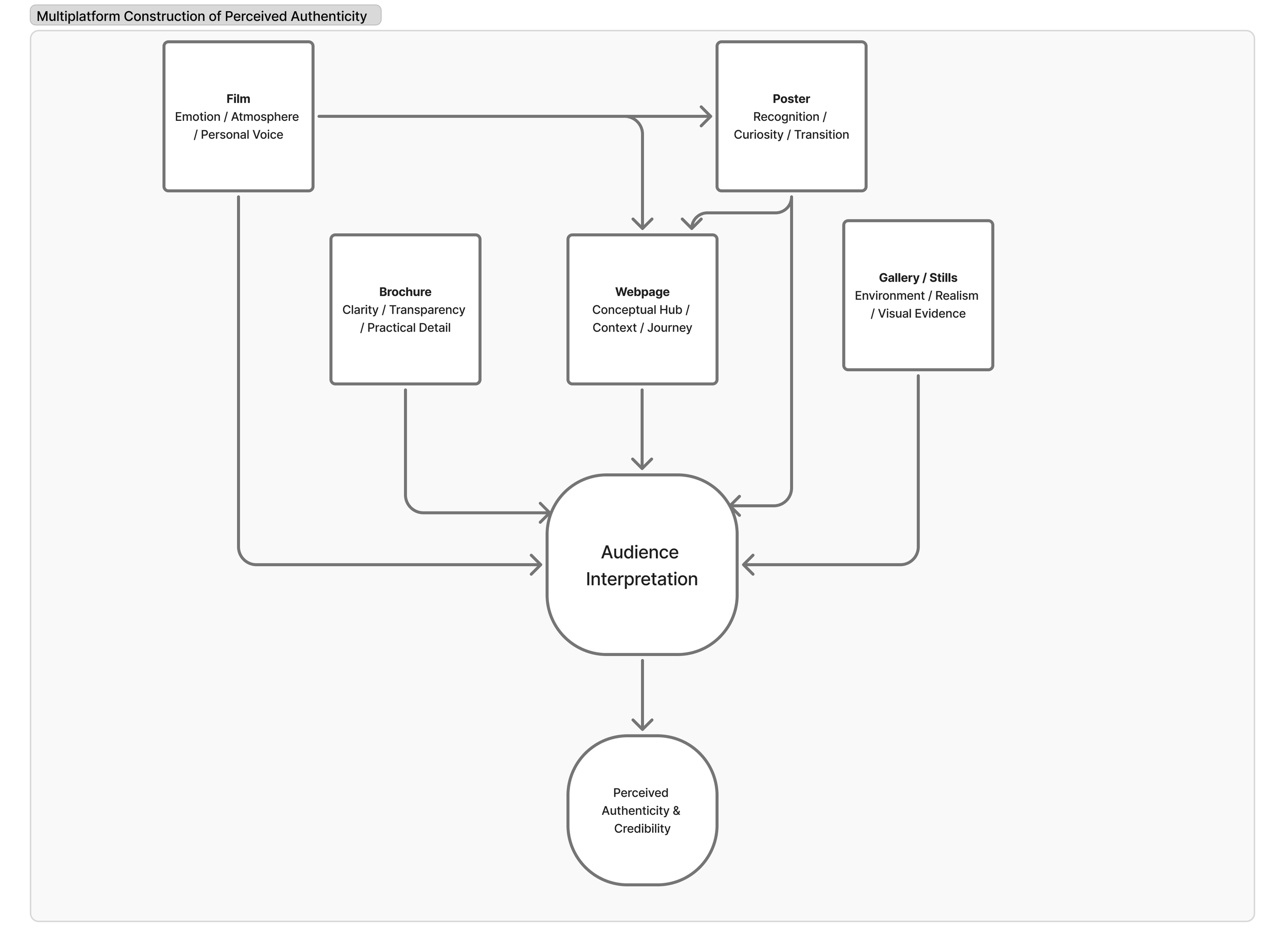
Figure A: Multiplatform Construction of Perceived Authenticity
Figure A visualises one of the project’s central findings, where authenticity was not communicated through isolated media outputs alone, but through the audience’s interpretation of interconnected forms of media that each contributed different communicative functions. While the film focused more heavily on atmosphere, emotional realism and personal voice, the brochure prioritised clarity, transparency and practical understanding, with the webpage acting as a central hub connecting these elements together. The poster and photographic portfolio similarly reinforced recognition, realism and environmental credibility across the wider campaign. Rather than functioning independently, these outputs collectively shaped audience interpretation, contributing towards a broader perception of authenticity and emotional connection. This reflected Jenkins’ (2006) argument that audiences construct meaning through movement between interconnected media experiences rather than through isolated pieces of content alone.
One of the most important reflections to emerge from the project was the realisation that authenticity within media is not necessarily created through visible imperfection. Influenced by research surrounding transparency, naturalness and audience distrust of overly curated media, I initially believed that leaving mistakes, awkward moments or imperfections within the work would be essential in creating a stronger sense of realism and honesty. However, the project ultimately challenged this assumption.
While some imperfections increased relatability, others distracted from the emotional tone and coherence of the work without meaningfully strengthening authenticity. Instead, audience feedback suggested that the strongest sense of authenticity emerged through the atmosphere, emotional sincerity and personal philosophy communicated throughout the project rather than through the visible presence of mistakes themselves. The project therefore revealed that authenticity was not dependent on proving or suggesting that media was unfiltered or unpolished, but on whether audiences perceived the emotional tone, intentions and creative perspective behind the work as believable and sincere.
This became a significant learning outcome that will continue to shape my creative practice moving forward. Rather than treating imperfection itself as evidence of authenticity, the project reinforced the importance of creating work that feels emotionally honest and philosophically consistent. In this sense, technical refinement and authenticity no longer appeared contradictory. Instead, authenticity emerged through the careful balance of tone, pacing, emotion and creative intention, where construction and sincerity could coexist rather than oppose one another.
Perhaps the most important shift in understanding throughout the project was recognising how authenticity is gradually constructed across multiple forms of media rather than communicated entirely through a single output. This was not an entirely new idea to me, as earlier work within the Multiplatform module had already introduced the importance of connected media experiences and coherent audience journeys. However, this project reinforced that understanding within a far more realistic and professionally relevant context, centred around a campaign and creative direction that I could realistically see myself pursuing beyond university.
What became increasingly clear throughout the project was that audiences did not build trust, emotional connection or understanding through one piece of media alone. Instead, different outputs contributed different forms of communication that collectively shaped audience perception over time. This changed the way I now think about multiplatform storytelling within professional practice. Rather than treating additional media as secondary promotional material surrounding one “main” output, I became more aware of how different formats can contribute entirely different emotional, practical and philosophical dimensions to the same experience.
Moving forward, this project has reinforced the importance of creating interconnected media ecosystems rather than isolated content pieces. It also strengthened my understanding that coherence across media does not necessarily come from repetition, but from maintaining a consistent emotional tone, creative philosophy and audience experience across different forms of communication. This became particularly significant because it connected theoretical learning from earlier modules to a form of marketing and storytelling that feels directly relevant to the type of creative work I hope to continue developing professionally.
Ultimately, the project suggested that authenticity functions less as a visual aesthetic and more as a relationship between creator, media and audience perception.
Perhaps the most important personal learning outcome from the project was the realisation that effective marketing within creative practice does not necessarily mean appealing to the widest possible audience. Earlier in my development, I often felt pressure to create work that aligned with current online trends, broader accessibility and the types of fast paced content most rewarded by contemporary digital platforms. However, throughout this project I became increasingly aware that the moments audiences connected with most strongly were often the moments that felt most reflective of my own pace, values and relationship with the environment rather than the moments designed purely for retention or visibility.
This significantly changed the way I now think about audience engagement and professional practice moving forward. Rather than viewing authenticity as a way of maximising audience reach, I began to understand it as a way of attracting audiences who are already emotionally and philosophically aligned with the experience being offered. In the context of the workshop itself, this became particularly important because the media was not only marketing a location or photography opportunity, but also communicating the pace, atmosphere and mindset surrounding the experience. In this sense, I realised that authentic marketing can function as a form of self selection, naturally attracting people who value patience, reflection, fieldcraft and emotional connection to place while discouraging audiences expecting highly commercialised or outcome driven experiences.
Moving forward, this has become one of the most influential reflections to emerge from the project. It reinforced the importance of developing a clearer creative identity rather than attempting to constantly adapt towards trends or mass audience expectations. The project ultimately suggested that authenticity within marketing may become most effective not when trying to appeal universally, but when building stronger relationships with smaller audiences who genuinely connect with the values, philosophy and experience being communicated.
A similar issue emerged during post production. The narration was intended to feel non performative and conversational, reflecting the poetic and experiential qualities discussed by Nichols (2017). However, feedback suggested that parts of the original delivery felt overly scripted or lacked presence. As a result, I re-recorded sections of the voiceover and refined the EQ, dynamics processing and vocal clarity following discussions with Sharon Harris and Marc Pugh-Jones. Although these decisions made the film more constructed, they also made it feel more intimate. This supported Grayson and Martinec’s (2004) argument that authenticity is “graded rather than absolute”, as audiences appeared to judge sincerity through tone and emotional believability rather than whether the material was entirely unplanned or unedited.
Audience feedback also exposed limitations in how realism and expectation were communicated. Liam Brown suggested that the webpage could place greater emphasis on unpredictability, including poor weather or the possibility of not achieving the desired photograph. Liam O’Hara also questioned whether the high end equipment he knows me to use could unintentionally affect accessibility or audience expectation. This was particularly useful criticism because, despite intentionally avoiding exaggerated claims or guaranteed outcomes, the visual polish and professional equipment still appeared capable of shaping assumptions about who the workshop was aimed at. To address this more effectively, I could have included camera and lens information or EXIF data alongside selected images to make the photographic process feel more transparent and achievable. I could also have included more direct guidance around poor conditions or unsuccessful shoots, helping reduce the sense that the experience depended on ideal outcomes.
Feedback from Brett Aggersberg during production meetings as well as Liam O’Hara and Sam Higgins’ email feedback suggested that the project focused more heavily on atmosphere, emotional immersion and creative identity than on some of the more practical or day to day aspects of the workshop experience itself. While this reflective and cinematic approach was intentional, the feedback highlighted how additional content surrounding accommodation, client testimonials, transport, meals or more informal behind the scenes interactions may have provided a broader and more grounded representation of the experience. Including these elements may have improved transparency and expectation management, particularly for audiences unfamiliar with photography workshops or travel within the Scottish Highlands. The feedback from Brett also prompted further reflection around cultural representation and the potential risks of romanticising or aestheticising the Highlands through media. While the project intentionally focused on emotional connection, atmosphere and lived experience, it reinforced the importance of balancing emotional storytelling with respectful and grounded representation when creating media centred around place, identity and nature based experiences. Ultimately, this suggested that authentic representation involves not only emotional sincerity, but also greater awareness of how environments, cultures and experiences are framed for audiences.
The feedback also exposed limitations within the authenticity framework itself. While useful as a reflective and comparative tool, it remained subjective, particularly because in the case where I was both creator and an evaluator of the work. Audience responses broadened this perspective, but the sample was still relatively small and made up largely of people familiar with me, my work or the course. This may have influenced scores relating to emotional connection, honesty and personal voice. A larger and more varied audience sample, including participants unfamiliar with my work, would have provided a more reliable indication of how the media communicated authenticity beyond my existing creative network.
The framework also assumed that higher authenticity would come from balancing all categories equally. However, the project suggested that this was not always realistic or desirable. Emotional realism sometimes reduced clarity, stronger narrative structure could reduce naturalism and technical polish could reduce spontaneity. This became apparent across both the feedback and my own self evaluation, where different outputs consistently scored more strongly in different areas depending on their intended role. In future, the framework could be adapted into separate versions for film, webpages, brochures or wider campaigns, rather than applying identical criteria across every format.
The multiplatform strategy itself could also have been stronger. Although the outputs were connected through shared branding, webpage integration and QR codes, the campaign was not fully optimised for different viewing contexts. The webpage was primarily designed for desktop viewing, despite QR code users being more likely to access it on mobile. I could also have created shorter edits of the film for social media or, as suggested by Liam O’Hara, a more direct piece to camera video explaining the workshop in practical terms. This may have improved accessibility and clarity without forcing the main film to become more conventional or instructional. Sam Higgins also noted hesitation around downloading external documents from websites, suggesting that placing more practical information directly within the webpage itself may improve audience trust and accessibility.
The project also highlighted a conflict between contemporary digital marketing practices and my own creative philosophy. Much current online marketing prioritises short form content, fast pacing, immediate hooks and highly optimised audience retention strategies designed to maximise visibility and engagement. While these approaches are widely considered effective within contemporary media industries, they often conflicted with the slower pacing, reflective atmosphere and observational style that formed the creative identity of this project. Throughout production, I became increasingly aware that reshaping the work entirely around algorithmic optimisation or broader audience appeal would likely weaken the emotional sincerity and tone that both the research and audience feedback identified as central strengths of the project. This reinforced the idea that authenticity in marketing may become more effective when attracting interested people to experience being communicated, rather than attempting to appeal to the widest possible audience.
As somebody who creates social media content for brands, it’s not surprising that Gareth Llewellyn’s feedback particularly reinforced this idea, noting that while the slower pacing of the film could potentially be reduced from a conventional marketing perspective, it also felt appropriate and emotionally aligned with the atmosphere of landscape and wildlife photography itself.
The photographic portfolio was another area with unrealised potential. Although the images supported the webpage, brochure and poster, they remained largely secondary to the film and written material. A photobook or printed journal could have placed the images at the centre of the project, allowing them to carry more narrative weight through sequencing, captions, behind the scenes notes and slower visual pacing. This may have communicated a deeper sense of place and process while giving the audience a more tangible connection to the workshop experience.
Bibliography
Aggersberg, B. (2026) In-person production meetings relating to Independent Project development. University of Wales Trinity Saint David. Personal communication, January–May 2026.
Barthes, R. (1980) Camera lucida: reflections on photography. London: Vintage.
Berger, J. (1972) Ways of seeing. London: Penguin.
Beverland, M.B. (2005) ‘Crafting brand authenticity: the case of luxury wines’, Journal of Management Studies, 42(5), pp. 1003–1029.
Brown, L. (2026) Audience feedback discussion via WhatsApp communication. Personal communication, 12 May 2026.
Edelman (2021) 2021 Edelman Trust Barometer. Available at: https://www.edelman.com/trust/2021-trust-barometer (Accessed: 14 March 2026).
Gaden, G. and Dumitrica, D. (2015) ‘The “real deal”: strategic authenticity, politics and social media’, First Monday, 20(1). Available at: https://firstmonday.org/ojs/index.php/fm/article/view/4985/4197 (Accessed: 18 March 2026).
Gibbs, G. (1988) Learning by doing: a guide to teaching and learning methods. Oxford: Oxford Polytechnic.
Grayson, K. and Martinec, R. (2004) ‘Consumer perceptions of iconicity and indexicality and their influence on assessments of authentic market offerings’, Journal of Consumer Research, 31(2), pp. 296–312.
Harari, Y.N. (2014) Sapiens: a brief history of humankind. London: Harvill Secker.
Harris, S. (2026) In-person feedback discussions relating to post-production audio. University of Wales Trinity Saint David. Personal communication, 2026.
Helland, E. (2023) Wildlife Photography Workshops 2023. Available at: https://www.youtube.com/watch?v=rppUIeXorKs (Accessed: 20 December 2025).
Higgins, S. (2026) Email communication regarding Independent Project feedback, 12 May.
Instagram (2026) Danjames.p account and audience engagement observations. Available at: https://www.instagram.com/danjames.p (Accessed: 5 January 2026).
Jenkins, H. (2006) Convergence culture: where old and new media collide. New York: New York University Press.
Jiang, Y. (2022) ‘The effect of perceived ad authenticity on consumer engagement’, Journal of Marketing Communications, 28(6), pp. 1–15.
Jones, M. (2026) email communications relating to narration and emotional tone. University of Wales Trinity Saint David. Personal communication, 2026.
Kolb, D.A. (1984) Experiential learning: experience as the source of learning and development. Englewood Cliffs, NJ: Prentice Hall.
Llewellyn, G. (2026) Email communication regarding Independent Project feedback, 12 May.
Lloyd, C. (2026) Audience feedback discussion following Independent Project screening. University of Wales Trinity Saint David. Personal communication, May 2026.
Martin, H. (2026) Photography workshops. Available at: https://harrymartinphotography.co.uk/workshops (Accessed: 19 January 2026).
Morhart, F., Malär, L., Guèvremont, A., Girardin, F. and Grohmann, B. (2015) ‘Brand authenticity: an integrative framework and measurement scale’, Journal of Consumer Psychology, 25(2), pp. 200–218.
Napoli, J., Dickinson, S.J., Beverland, M.B. and Farrelly, F. (2014) ‘Measuring consumer-based brand authenticity’, Journal of Business Research, 67(6), pp. 1090–1098.
National Geographic (2014) When wildlife photography is staged, is it still real? Available at: https://www.nationalgeographic.com/adventure/article/140116-wildlife-photography-film-ethics-manipulation-feeding-staging-science (Accessed: 24 March 2026).
Neugebauer, J. (2019) Making the most of your placement. London: Routledge.
Nichols, B. (2017) Introduction to documentary. 3rd edn. Bloomington: Indiana University Press.
Nikon (2026) Brand campaigns and visual marketing reviewed during project development. Available at: https://www.nikon.co.uk (Accessed: 12 February 2026).
Nikon School (2025) Nikon School Adventures: Kingdom of the Musk Ox (Winter). Available at: https://nikonschool.co.uk/course/8039/nikon-school-adventures-kingdom-of-the-musk-ox-winter/12579 (Accessed: 22 April 2026).
O’Hara, L. (2026) Audience feedback questionnaire and email communication. Personal communication, 11 May 2026.
Phillips, D.J. (2024) Personal Development Plan. University of Wales Trinity Saint David.
Phillips, E. (2026) Audience feedback. Personal communication, May 2026.
Popsys, J. and Van Nieuwenhove, J. (2026) East Greenland photography workshop with James Popsys. Available at: https://jvn.photo/photo-workshops/east-greenland-james-popsys-2026/ (Accessed: 22 April 2026).
Pugh, J. (2025) Informal discussions relating to authenticity and emotional storytelling. Personal communication, December 2025.
Pugh, J. (2026) Audience feedback email communication. Personal communication, 11 May 2026.
Pugh-Jones, M. (2026) In-person discussion relating to Scottish identity and cultural representation. University of Wales Trinity Saint David. Personal communication, 2026.
Reddy, Y.M. and Andrade, H. (2010) ‘A review of rubric use in higher education’, Assessment & Evaluation in Higher Education, 35(4), pp. 435–448.
Rose, R.L. and Wood, S.L. (2005) ‘Paradox and the consumption of authenticity through reality television’, Journal of Consumer Research, 32(2), pp. 284–296.
Ryan, C. (2019) Civilized to death: the price of progress. New York: Avid Reader Press.
Skeggs, H. (2026) Path of the Puma: Chile 2026. Unpublished workshop brochure.
Skye High Wildlife (2026) Wildlife watching & photography on the Isle of Skye. Available at: https://skyehighwildlife.com/ (Accessed: 5 February 2026).
Skye Photo Academy (2025) The Big Workshop. Available at: https://www.skyephotoacademy.com/services/skye-photography-workshops/the-big-workshop (Accessed: 27 January 2026).
Sontag, S. (1977) On photography. London: Penguin.
Stackla (2019) Bridging the gap: consumer and marketing perspectives on content in the digital age. Available at: https://www.nosto.com/wp-content/uploads/2019/02/Stackla-Consumer-Marketer-Data-Report-2019_FINAL.pdf (Accessed: 25 November 2025).
Thurston, G. (2019) Journeys in the wild: the secret life of a cameraman. London: Seven Dials.
Trillò, T., Cortese, D. and Faccipieri, S. (2021) ‘Authenticity and engagement on Instagram: the effect of natural and unfiltered imagery’, Social Media and Society, 7(2), pp. 1–12.
Wildist (2025) Landscape photography workshop promotional film. Available at: https://www.youtube.com/watch?v=QhY_rW1Pmhk (Accessed: 20 December 2025